.png)


Is Your Home Health Agency Ready for 2026? Tech Trends that Save Careers
Let's be real for a second: home health care is at a crossroads.
Your clinicians are stretched thin. Paperwork is piling up. And every time you think you've nailed compliance with 42 CFR 484 documentation requirements, something new pops up that makes you question everything.
Sound familiar?
Here's the thing, 2026 isn't just another year on the calendar. It's shaping up to be the year that separates the home health agencies that thrive from the ones that struggle to keep their doors open. The difference? Technology adoption.
But we're not talking about shiny gadgets or complicated systems that make everyone's job harder. We're talking about smart, practical tech that actually makes life easier for your team, and keeps your best clinicians from walking out the door.
Let's dive into the trends that matter.
The Real Crisis Nobody's Talking About
Before we get into the solutions, let's acknowledge the elephant in the room: your clinicians are drowning in documentation.
The average home health nurse spends nearly half their day on paperwork. Half. That's time not spent with patients, not building relationships, and definitely not doing the work they signed up for.
And here's where it gets worse, when documentation becomes the biggest part of the job, burnout follows. When burnout hits, resignations come next. Suddenly, you're not just dealing with a compliance problem; you're dealing with a staffing crisis.
The agencies that figure out how to fix this? They're the ones that'll still be standing strong in 2026 and beyond.

Tech Trend #1: AI-Powered Documentation That Actually Works
Let's start with the most impactful shift happening right now: home health documentation software powered by AI.
We're not talking about robots replacing your clinicians (that's not happening, and honestly, nobody wants that). We're talking about AI that handles the tedious stuff, the note-taking, the form-filling, the endless clicking through EHR systems, so your team can focus on actual patient care.
Picture this: Your nurse finishes a home visit, speaks naturally about what happened, and the AI captures everything. Chief complaint? Check. Assessment findings? Done. Care plan updates? Handled. All formatted correctly, all compliant with 42 CFR 484 documentation requirements, all ready for review in minutes instead of hours.
This isn't science fiction. It's happening right now, and agencies using AI documentation tools are saving their clinicians 2+ hours daily.
The best part? When clinicians spend less time on paperwork, they actually enjoy their jobs again. Novel concept, right?
Tech Trend #2: Real-Time Compliance Checking (Because Audits Shouldn't Be Scary)
Here's a stat that keeps agency owners up at night: Medicare audits are getting more frequent AND more thorough.
The documentation requirements under 42 CFR 484 are specific. They're detailed. And missing even small elements can trigger claim denials, recoupments, or worse.
The old way of handling this? Hope for the best, hire a compliance consultant, and pray your documentation holds up when the auditors come knocking.
The 2026 way? Real-time compliance checking built directly into your documentation workflow.
Modern home health documentation software can flag compliance gaps before the note is even finalized. Missing a required element for a OASIS assessment? The system catches it. Documentation doesn't support medical necessity? You'll know immediately.
This kind of real-time compliance checking isn't just convenient, it's becoming essential for agencies that want to stay audit-proof without adding another full-time compliance officer to payroll.
Tech Trend #3: Hybrid Care Models and Remote Monitoring
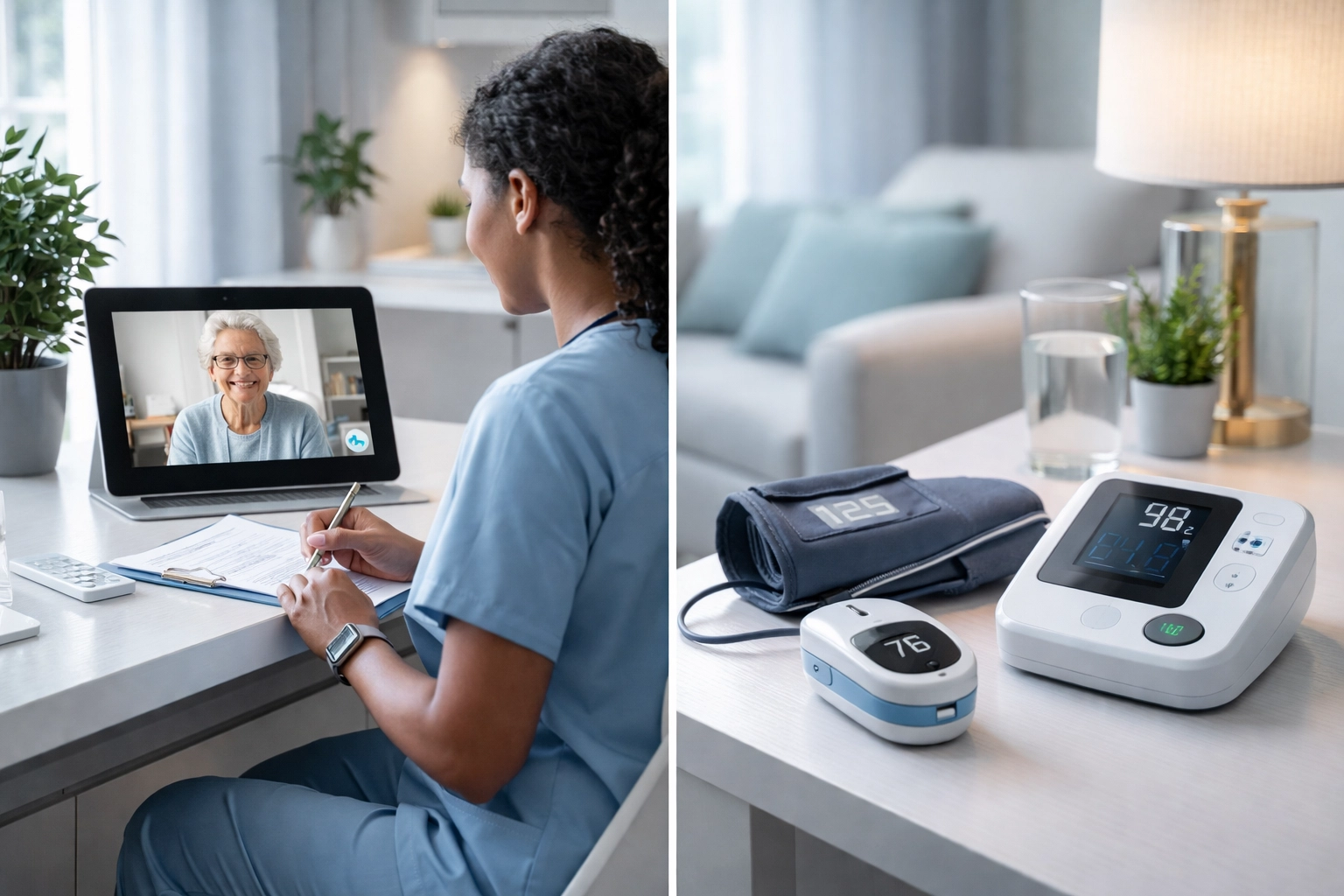
COVID accelerated telehealth adoption by about a decade. But in 2026, we're moving beyond basic video calls into something more sophisticated: true hybrid care models.
What does this look like in practice?
In-person visits for assessments that require hands-on care
Virtual check-ins between visits to monitor progress
Remote patient monitoring devices that alert clinicians to changes in real-time
Integrated communication tools that keep the entire care team connected
For home health agencies, this is a game-changer. You can stretch your staff resources further without sacrificing care quality. Your clinicians can respond faster when conditions change. And patients feel more connected to their care team, even when nobody's physically in their home.
The agencies winning in 2026 aren't choosing between in-person and virtual, they're blending both into seamless care delivery.

Tech Trend #4: Smart Scheduling and Automated Visit Verification
Remember the days of manual scheduling? Spreadsheets, phone calls, last-minute scrambles when someone calls in sick?
Yeah, those days need to end.
AI-powered scheduling systems now match caregivers to visits based on skills, location, patient preferences, and availability: automatically. No more playing Tetris with your schedule every morning.
And Electronic Visit Verification (EVV) has evolved from a compliance checkbox into an actual operational tool. Modern systems integrate seamlessly with documentation, automatically capturing visit times, locations, and services provided without extra steps for your clinicians.
The result? Less administrative burden, better compliance, and happier staff who aren't constantly frustrated by scheduling chaos.
Why This All Matters for Careers (Not Just Operations)
Here's the part that often gets lost in conversations about healthcare technology: this stuff saves careers.
When clinicians chose home health, they did it because they wanted meaningful connections with patients. They wanted autonomy. They wanted to make a real difference in people's lives.
What they didn't sign up for was spending half their workday on documentation. They didn't expect to dread opening their laptop at 9 PM to finish notes. They didn't anticipate the constant anxiety of wondering if their documentation would hold up under audit scrutiny.
Technology that reduces documentation burden, ensures compliance automatically, and streamlines operations isn't just good for your bottom line: it's good for the humans doing the work.
Agencies that understand this are seeing:
Lower turnover rates
Easier recruitment (word spreads when your agency doesn't burn people out)
Higher patient satisfaction scores
Better clinical outcomes
It's all connected. Take care of your clinicians, and they'll take care of your patients.
Getting Your Agency Ready for 2026
So where do you start?
First, take an honest look at your current documentation workflow. How much time are your clinicians spending on paperwork versus patient care? Where are the biggest pain points? What's your current compliance error rate?
Second, evaluate your technology stack. Is your home health documentation software helping or hindering? Does it support 42 CFR 484 documentation requirements automatically, or is compliance still a manual process?
Third, talk to your team. What would make their jobs easier? What frustrations do they deal with daily? The best technology implementations happen when leadership actually listens to the people doing the work.
Finally, don't try to change everything at once. Start with the highest-impact area: usually documentation: and build from there.
Ready to Future-Proof Your Agency?
Look, we get it. Change is hard. New technology can feel overwhelming. And when you're already stretched thin, adding "evaluate new software" to the to-do list might seem impossible.
But the agencies that wait too long to adapt? They're the ones that'll be scrambling in 2026 while their competitors cruise ahead.
CareMetric AI was built specifically for this moment: home health documentation software that handles compliance automatically, reduces documentation time dramatically, and actually makes your clinicians' lives easier.
Don't take our word for it. Try it free for 14 days and see the difference for yourself at caremetricai.com.
Your team: and your patients( will thank you.)
Comments