.png)


7 Workflow Hacks to Reduce Clinician Documentation Time by 70%
Let's be honest, you didn't get into healthcare to spend hours staring at a screen, clicking through endless forms, and typing the same patient notes over and over again. You got into this field to help people. To make a difference. To actually care for patients.
But somehow, documentation has become the monster that eats up your evenings, your lunch breaks, and sometimes even your weekends. Sound familiar?
Here's the good news: it doesn't have to be this way. With the right workflow tweaks (and maybe a little help from smart technology), you can slash your documentation time by up to 70%. Yes, really.
Let's dive into seven proven hacks that are helping clinicians and nurses reclaim their time: and their sanity.
1. Document in Real-Time (Not at 9 PM)
We get it. When you're in the middle of a hectic shift, the last thing you want to do is stop and chart. But here's the thing: catching up on notes hours later is actually way more time-consuming than documenting as you go.
When you chart in real-time: during or immediately after a patient encounter: you capture details while they're still fresh. No more trying to remember what Mrs. Johnson said about her medication side effects three patients ago. No more end-of-day "note marathons" that stretch into the evening.
Pro tip: Even quick voice notes or bullet points during the visit can save you massive time later. Your future self will thank you.

2. Embrace Team-Based Documentation
Here's a secret that high-performing practices have figured out: the physician or nurse practitioner doesn't need to document everything.
A team-based approach lets medical assistants, nurses, and other clinical staff handle parts of the documentation: like recording vitals, updating medication lists, or noting allergies: while you focus on the clinical decision-making and sign off on the final notes.
This isn't about cutting corners. It's about working smarter. Advanced team-based care models often have one to three clinical assistants per physician, each handling documentation tasks that match their skill level.
The result? You spend less time typing and more time doing what only you can do.
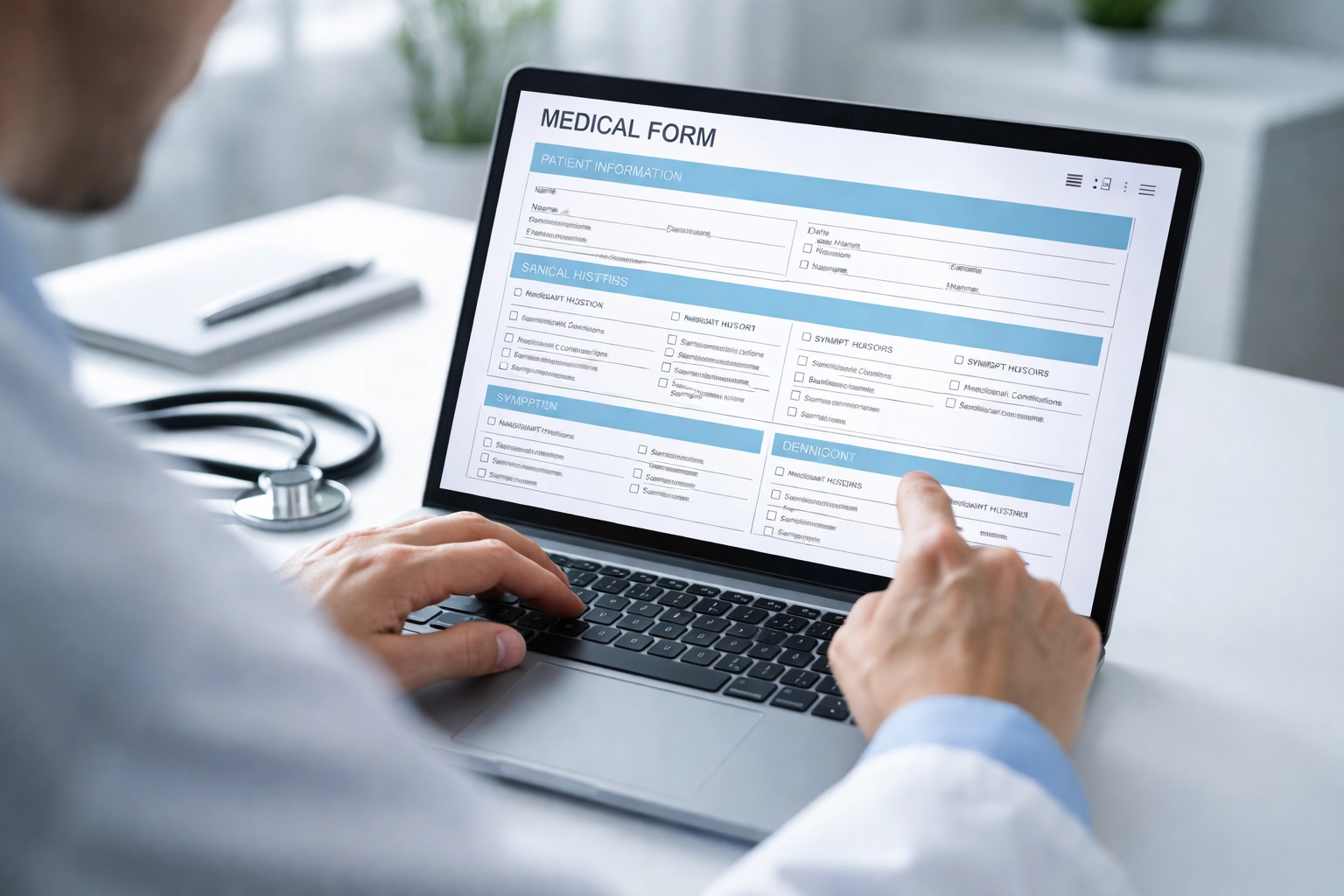
3. Use Customized Templates (That Actually Work for You)
Templates sometimes get a bad rap. They can feel restrictive or cookie-cutter. But the right templates? They're absolute game-changers.
Think of templates as shortcuts that reduce your cognitive load. Instead of starting from scratch every time, you have a framework that:
Prevents you from missing key clinical information
Cuts down on typing time significantly
Supports accurate billing and coding
Keeps your documentation consistent across patients
The key is customization. Work with your team to build templates based on the details you frequently miss or the clarifications your coding team often requests. A well-designed template isn't a cage: it's a launchpad.
4. Document Only What's Medically Necessary
This one might sound obvious, but you'd be surprised how much unnecessary documentation happens out of habit or fear of "missing something."
Here's the reality: a 99213 level of service (which family physicians use about 61% of the time) doesn't require a comprehensive review of systems or a head-to-toe exam. So why document like it does?
Know your billing requirements. Know what's clinically relevant for the visit at hand. And leave the unnecessary boxes alone.
This simple mindset shift can save you hours every week. Document what matters, skip what doesn't.
5. Optimize Your Equipment Setup
Ever notice how a slow-loading computer or a wobbly cart can absolutely tank your mood and productivity? Small hardware issues compound throughout the day, turning documentation into a frustrating slog.
A supportive workstation setup makes a bigger difference than most people realize:
Lightweight, mobile carts that go where you go
Devices with quick boot times and long battery life
Stable Wi-Fi coverage throughout your facility
Screens at comfortable heights to prevent neck strain
Sometimes the frustration you feel about documentation isn't about the documentation itself: it's about the equipment. Fix the physical setup, and the digital workflow often follows.
6. Use Voice Dictation and AI-Powered Tools
This is where things get exciting. Voice dictation and AI-powered documentation tools are no longer futuristic concepts: they're here, they work, and they're saving clinicians hours every single day.
Instead of typing out every note manually, you can:
Dictate notes aloud during or after patient visits
Use AI scribes that listen to your conversations and generate structured notes automatically
Leverage smart suggestions for terminology, coding, and incomplete fields
Auto-pull vitals, lab data, and other information directly into your notes
The best part? Dictating notes during patient visits can actually improve patient engagement. When patients hear you summarizing their concerns out loud, they feel heard: and they can correct any misunderstandings on the spot.

7. Leverage Your EHR's Built-In Features (and Eliminate Duplication)
Most EHR systems have powerful features that go completely unused. Auto-fill for routine fields. Smart fields that sync across sections. Integration with billing and coding systems.
Take the time to learn what your EHR can actually do. Better yet, work with your IT team to:
Remove redundant prompts that slow you down
Enable auto-population for data you enter repeatedly
Integrate systems so information entered once flows downstream automatically
The goal is to enter data once and have it work everywhere it needs to. Duplicate entry is the enemy of efficiency: eliminate it wherever you can.
Putting It All Together: The 70% Solution
Here's the thing: any one of these hacks will save you time. But when you combine them? That's when you start seeing the dramatic 70% reduction in documentation time that seemed impossible before.
Real-time documentation + team support + smart templates + focused charting + optimized equipment + AI-powered tools + EHR optimization = a completely transformed workflow.
You get your evenings back. You reduce burnout. You actually enjoy your job again. And most importantly, you have more time for what matters most: your patients.
Ready to See It in Action?
At CareMetric AI, we've built our platform specifically to help clinicians and nurses crush their documentation burden. Our AI-powered tools handle the heavy lifting: voice dictation, smart note generation, compliance checking, and more: so you can focus on patient care.
We're talking about a real, measurable 70% reduction in documentation time. Not someday. Not maybe. Right now.
Want to see how it works for your workflow?
Start your 14-day free trial at CareMetric AI and experience the difference for yourself. No credit card required, no strings attached. Just faster, smarter documentation that actually works.
Your patients are waiting. Your time is precious. Let's get you back to doing what you love.
Have questions about streamlining your clinical documentation? Check out our FAQs or visit our Support Center for more resources.
Comments