.png)


Why Your EMR Isn't Enough: The Case for a Dedicated Clinical Documentation Layer
- kdeyarmin
- Jan 30
- 5 min read
Let's get one thing straight: your EMR isn't the problem. It's doing exactly what it was designed to do: store patient records, manage appointments, handle billing workflows, and serve as a digital repository for healthcare data. The issue is that we've been asking it to do everything, including becoming the ultimate clinical documentation solution.
And that's where things fall apart.
Electronic Medical Records systems are the backbone of modern healthcare IT infrastructure, but they were never built to excel at the nuanced, real-time demands of clinical documentation. While they check the boxes for data storage and regulatory compliance, they fall short when it comes to capturing the full clinical story, supporting clinician workflow, and ensuring documentation accuracy at the point of care.
The truth? Your practice needs both. A robust EMR and a dedicated clinical documentation layer that fills the critical gaps your EMR can't address.
The Documentation Gaps Your EMR Can't Fix
Incomplete Clinical Capture
Here's a stat that should make you uncomfortable: when researchers compared EMR data with actual patient interviews, they found significant discordance in symptoms and medications. Patients reported far more nonprescription medications and symptoms than what appeared in their EMR records.
Why does this happen? EMRs rely heavily on structured data entry fields, dropdowns, and checkboxes. When clinicians are rushed (which is always), they're forced to choose between spending time with the patient or meticulously documenting every clinical detail. Guess which one loses?

The result is incomplete documentation: missing symptoms, unreported medications, and clinical nuances that get lost in the shuffle. This isn't just a documentation problem; it's a patient safety issue. When critical information doesn't make it into the record, care decisions get made with incomplete data.
The Copy-Forward Trap
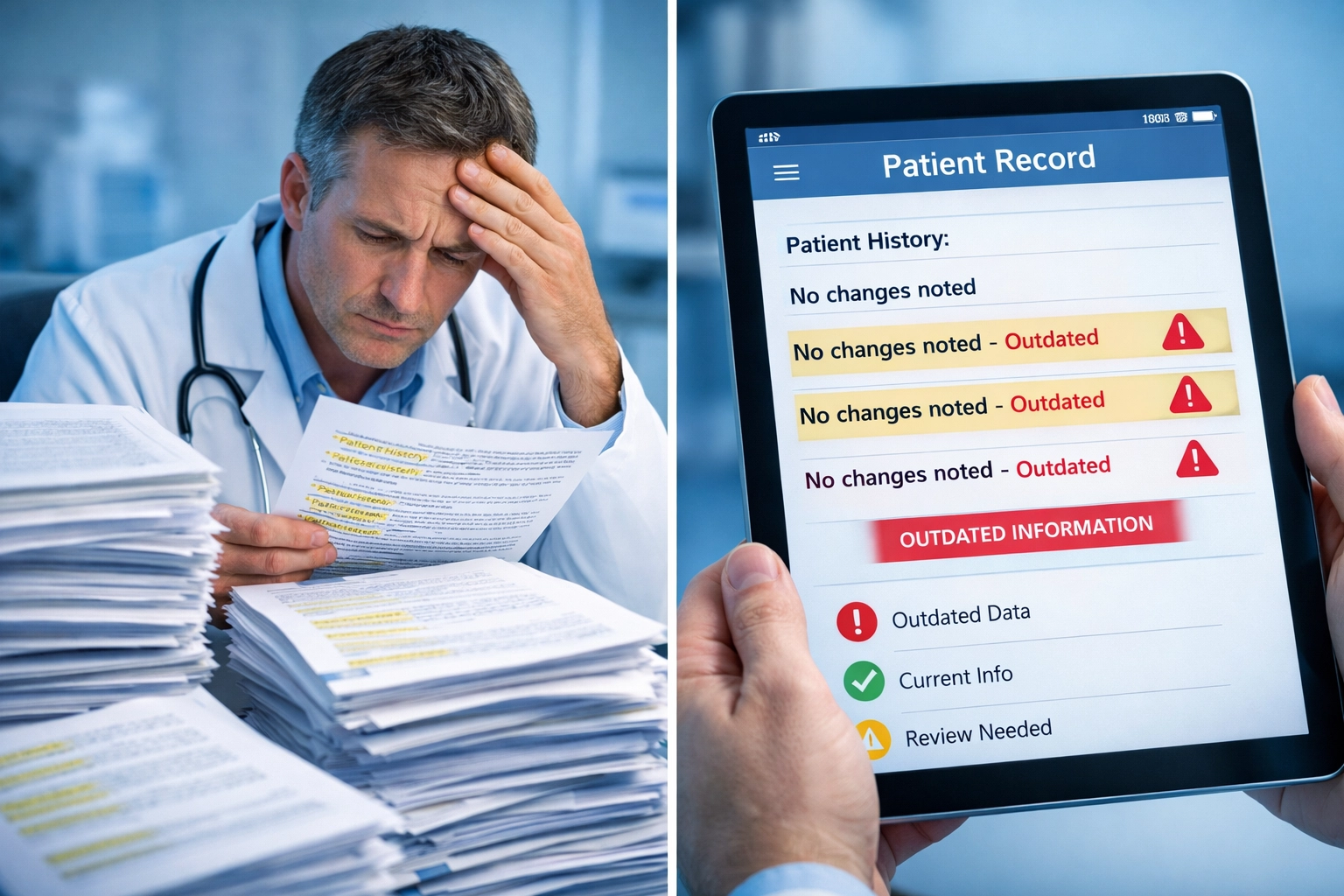
Most EMRs offer templates and copy-forward functionality to "save time." In theory, this sounds great. In practice, it perpetuates outdated and inaccurate information across multiple encounters.
Picture this: A patient comes in with conjunctivitis. The condition is documented, treated, and resolved. But because the clinician uses a template or copies forward previous notes, "conjunctivitis" continues to appear in documentation for months afterward. Now it looks like the treatment failed or the clinician isn't properly updating records: neither of which is true, but both of which create compliance headaches and potential malpractice exposure.
EMR templates also tend to contain outdated language that triggers audits, creates coding denials, and compromises clinical communication. Your documentation tool shouldn't be working against you, yet that's exactly what happens when these features are overused without proper safeguards.
Documentation Errors Double Malpractice Risk
Research shows that documentation deficiencies in EMRs more than double the odds of medical malpractice claims closing with indemnity payments. Common errors include inadequate documentation, inconsistent entries, incomplete informed consent records, and altered information.
Consider prescription documentation. Simply entering a medication name without dose, quantity, and instructions fails to meet basic documentation guidelines. Yet EMRs often allow this incomplete entry to pass through without validation. No red flags. No warnings. Just a ticking time bomb waiting for an audit or adverse event.
Why You Need a Dedicated Clinical Documentation Layer
This is where specialized clinical documentation improvement software changes the game. Rather than replacing your EMR, it sits on top of it: acting as an intelligent layer that handles what EMRs were never designed to do well.
Real-Time Clinical Intelligence
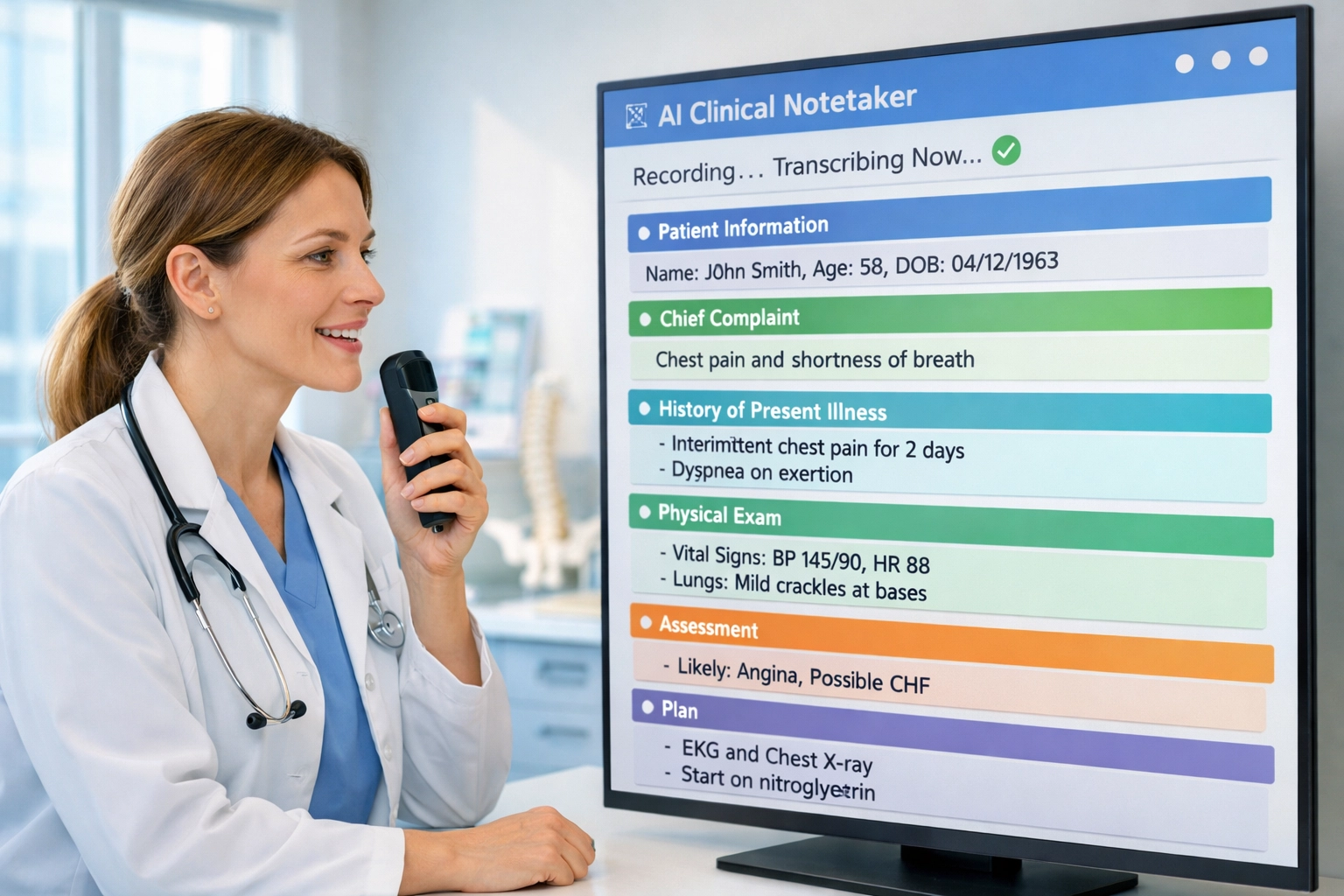
A dedicated documentation layer uses AI to understand clinical context as it's being spoken or typed. When a clinician dictates "patient presents with chest pain radiating to left arm," the system doesn't just transcribe words: it recognizes the clinical significance, suggests relevant assessment protocols, and ensures nothing gets missed in the documentation.
This is fundamentally different from EMR documentation, which treats everything as data entry. The AI understands medicine, not just data fields.
Live Validation That Actually Works
Here's where things get interesting. While EMRs might flag obvious errors after the fact, a specialized clinical documentation layer validates information in real-time as you're documenting.
Think of it as having an expert compliance officer looking over your shoulder (in a helpful, non-annoying way). If you're documenting a home health visit and miss a required element for Medicare compliance, the system alerts you immediately: not three months later when the claim gets denied.
Live validation catches:
Missing required elements for regulatory compliance
Inconsistencies between current and previous documentation
Incomplete medication reconciliation
Gaps in care plan documentation
Billing and coding discrepancies
This proactive approach prevents problems before they become claim denials, audit findings, or malpractice liabilities. Your EMR stores the data; your clinical documentation layer ensures that data is complete, accurate, and compliant.
Workflow Integration Without Disruption
One of the biggest complaints about EMRs is how they disrupt clinical workflow. Clinicians spend more time staring at screens than looking at patients, and the documentation burden contributes significantly to burnout.
A dedicated documentation layer integrates with your existing EMR without replacing it or forcing you to learn an entirely new system. Instead, it enhances your workflow by:
Capturing clinical information through natural voice dictation
Auto-generating structured SOAP notes from conversational documentation
Syncing seamlessly with your EMR's required fields and formats
Reducing documentation time by up to 70% while improving quality
You're not abandoning your EMR investment: you're making it work better by adding the intelligence it lacks.
Specialized for Clinical Excellence
General-purpose EMRs try to serve every specialty and every use case, which means they're optimized for none of them. A specialized clinical documentation layer is built specifically for the unique challenges of clinical documentation.
For home health agencies, that means understanding 42 CFR 484 compliance requirements and ensuring every visit note meets Medicare standards. For behavioral health practices, it means handling narrative-heavy documentation without forcing clinicians into rigid templates. For primary care, it means capturing complex patient presentations while maintaining workflow efficiency.
Your EMR handles scheduling and billing. Your clinical documentation layer handles the medicine.
The ROI of Getting Documentation Right
Let's talk numbers because this matters to your bottom line.
Reduced claim denials: Incomplete documentation is one of the leading causes of claim rejections. When every note includes all required elements validated in real-time, your clean claim rate improves dramatically. For many practices, this alone pays for the clinical documentation layer within months.
Malpractice protection: Better documentation protects you legally. When clinical decisions are clearly documented with proper context and rationale, you have a defensible record if complications arise. Remember, documentation errors more than double malpractice claim payouts.
Time savings: Clinicians using specialized AI clinical documentation tools report saving 2+ hours daily on documentation. That's time that can be redirected to patient care, additional appointments, or simply going home at a reasonable hour. Less burnout, better retention, improved patient satisfaction.
Quality scores: Complete, accurate documentation directly impacts quality scores and reimbursement. When you capture all relevant clinical details, your outcomes metrics improve because you're showing the full picture of the care you're providing.
Making the Shift: EMR + Documentation Layer
The future of clinical documentation isn't about replacing your EMR: it's about augmenting it with specialized tools that handle what it can't. Your EMR remains your system of record, but your clinical documentation layer becomes your system of intelligence.
This approach gives you:
The stability and compliance of your established EMR
The clinical intelligence and efficiency of purpose-built documentation AI
The flexibility to adapt to changing regulations and specialties
The peace of mind that comes with audit-proof documentation
You don't have to choose between systems. You can have both, working together to deliver better outcomes for your practice and your patients.
Experience the Difference
If you're tired of fighting with your EMR's documentation limitations, it's time to see what a dedicated clinical documentation layer can do for your practice. CareMetric AI combines AI-powered voice dictation, real-time compliance validation, and intelligent SOAP note generation: all while integrating seamlessly with your existing EMR.
Start your 14-day free trial and discover how clinical documentation is supposed to work. No credit card required. No lengthy implementation. Just better documentation from day one.
Your EMR is fine. But paired with the right clinical documentation layer? It's unstoppable.
Comments