.png)


The Next-Gen Clinician: Why AI Documentation Training is Replacing the Old Way
- kdeyarmin
- Jan 30
- 5 min read
Remember your first day as a clinician? The excitement, the nerves, and... the overwhelming realization that you'd be spending nearly half your working hours on documentation? Yeah, that's changing. Fast.
Here's the thing: we're training a new generation of healthcare professionals right now, and they're learning a completely different way to practice medicine. Instead of being thrown into the deep end with paper charts, clunky EHRs, and endless typing, they're starting their careers with AI documentation tools from day one. And honestly? It's about time.
The Old Training Method is Officially Outdated
For decades, onboarding a new clinician meant teaching them the "documentation gauntlet", how to frantically type between patients, memorize compliance codes, stay late charting, and somehow not burn out before their second year. It was a rite of passage, sure. But it was also exhausting, inefficient, and totally unnecessary in 2026.
The traditional approach assumed that clinical documentation was just part of the job, a painful, time-consuming part, but unavoidable. New hires were expected to adapt, get faster, and eventually (maybe) find their rhythm. The problem? Many never did. They either burned out, made costly documentation errors, or spent their entire careers resenting the administrative burden that kept them from actual patient care.

Now imagine a different scenario: a new clinician walks in on day one and is immediately trained on AI-powered documentation tools. They learn to dictate notes naturally, rely on real-time compliance checking, and trust that the system will catch errors they haven't even learned to recognize yet. They're efficient, confident, and actually enjoying their job from week one. That's not a fantasy: it's happening right now in forward-thinking practices.
Why Start with AI from Day One?
Training new clinicians on AI documentation from the beginning isn't just about convenience. It's about building a foundation for long-term success, both for the individual and the organization. Here's why it matters:
1. Efficiency Becomes Second Nature
When you train someone the old way first, you're essentially teaching them bad habits they'll have to unlearn later. They develop workarounds, shortcuts, and coping mechanisms for a broken system. Then, when you introduce AI tools down the line, there's resistance. "I've always done it this way" becomes the enemy of progress.
But start with AI from day one? Efficiency becomes muscle memory. New clinicians learn to leverage voice dictation and smart notes as naturally as they learn patient assessment techniques. They don't know any other way: and that's a good thing. Studies show that AI-assisted documentation can reduce physician time spent on charting by up to 70%, with real-world implementations saving clinicians an average of 52 minutes daily. When that's your baseline from day one, you're set up for a sustainable career.
2. Compliance is Built Into the Workflow
Let's be honest: new clinicians are compliance nightmares. Not because they don't care, but because they're learning a million things at once, and remembering every Medicare regulation or 42 CFR 484 requirement is nearly impossible.

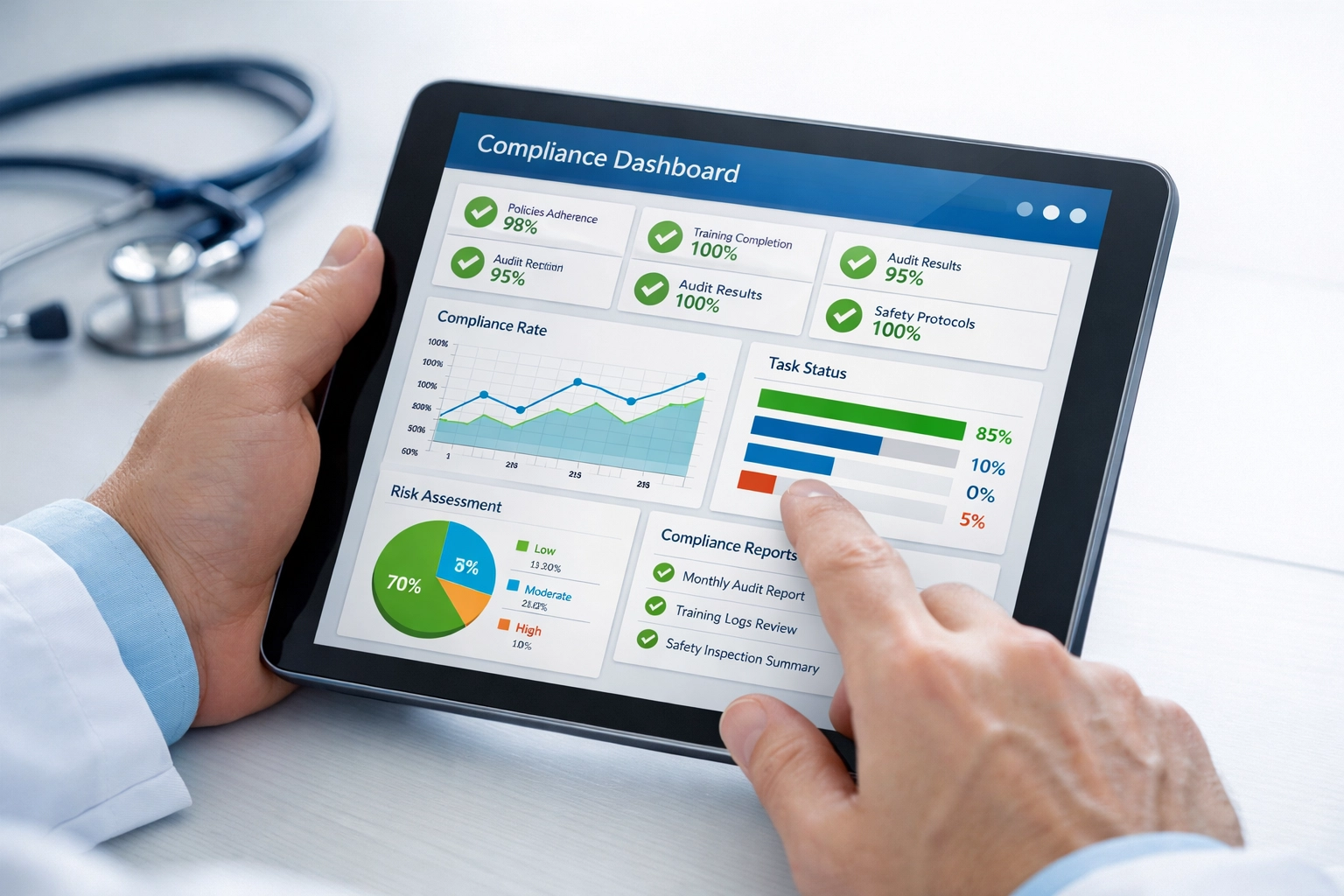
AI documentation tools solve this by baking compliance into the process. Real-time validation catches issues before they become problems. New hires don't have to memorize every rule: they just need to follow the prompts and trust the system to guide them. In fact, AI-assisted systems catch approximately 32% more clinical validation issues compared to traditional manual review processes. That means fewer denied claims, fewer audit headaches, and way less stress for everyone involved.
3. Burnout Prevention Starts on Day One
Here's a stat that should terrify every healthcare administrator: documentation burden is one of the leading causes of clinician burnout. And burnout typically starts early: often within the first two years of practice.
Training new clinicians on AI tools from the beginning fundamentally changes this trajectory. Instead of drowning in paperwork, they experience what modern healthcare should feel like: more face-to-face patient time, less administrative drudgery, and the satisfaction of actually practicing medicine. Organizations that have implemented AI documentation report 8–12 percentage-point improvements in physician satisfaction scores. That's not a marginal gain: that's a career-saver.
What the Next-Gen Training Model Actually Looks Like
So what does it mean to train someone on AI documentation from day one? It's not about replacing clinical education: it's about integrating technology into the learning process so it becomes a natural extension of care delivery.
Week 1: Introduction to AI-Assisted Workflows
New hires learn the basics: how to use voice dictation, how the AI interprets clinical terminology, and how real-time compliance checking works. Instead of spending hours learning manual charting protocols, they're immediately working smarter, not harder.
Week 2-4: Hands-On Practice with Feedback Loops
This is where the magic happens. New clinicians practice documenting real (or simulated) patient encounters while the AI provides instant feedback on accuracy, completeness, and compliance. They learn what good documentation looks like without the trial-and-error of traditional methods. They see firsthand how reducing documentation time by 70% opens up bandwidth for deeper patient engagement.
Month 2-3: Mastery and Customization
By now, the new clinician is comfortable with the AI tools and starts customizing workflows to match their style. They understand how to leverage predictive analytics for early risk identification, how to audit-proof their documentation, and how to work seamlessly with the technology rather than fighting against it.
The Organizational Benefits are Massive
Training new clinicians on AI from day one isn't just good for them: it's transformational for the entire organization.
Faster Onboarding, Higher Productivity
Traditionally, it takes 6-12 months for a new clinician to reach full productivity. With AI training from the start, that timeline compresses dramatically. New hires are seeing patients efficiently within weeks, not months, because they're not bogged down by documentation learning curves.
Fewer Errors, Better Revenue Capture
Organizations implementing AI documentation from the onboarding stage report 2–3-day reductions in discharge-to-billing timelines and denial reductions of 12–18% for complex cases. That's real money hitting the bottom line, all because new clinicians are documenting accurately from day one.
Cultural Shift Toward Innovation
When you train new hires on cutting-edge tools immediately, you're sending a message: "We value efficiency, innovation, and your well-being." That attracts top talent and creates a culture where technology is embraced, not feared. It also future-proofs your workforce: these clinicians will be the ones driving innovation for the next 30 years.
The Old Way Isn't Coming Back
Look, we get it. Change is hard, especially in healthcare where "we've always done it this way" is basically a mantra. But here's the reality: the next generation of clinicians expects better. They grew up with technology that anticipates their needs, learns from their behavior, and makes life easier. They're not going to accept a career spent drowning in paperwork when better tools exist.
The practices and health systems that recognize this: and build AI training into their onboarding from day one: will have a massive competitive advantage. They'll attract better talent, retain clinicians longer, and deliver higher-quality care. The ones that cling to the old way? They'll be left behind, struggling with turnover, burnout, and inefficiency.
Ready to Train the Next Generation the Right Way?
If you're onboarding new clinicians (or just tired of the old documentation grind yourself), it's time to see what modern AI tools can do. CareMetric AI is built specifically for this moment: real-time compliance, voice-powered notes, and workflows designed to make clinicians more efficient from day one.
Start your 14-day free trial and experience what next-gen clinical documentation actually feels like. No credit card required, no strings attached; just a better way to practice medicine.
The future of healthcare isn't coming. It's already here. And it's trained on AI from day one.
Comments