.png)


How to Reduce Documentation Time by 70% and Never Fail a Medicare Audit Again (Easy Guide for Busy Clinicians)
Let's be honest, documentation is probably the least favorite part of your day. You didn't go to medical school or nursing school to spend 2-3 hours every evening finishing charts. You went to help people get better.
But here's the reality: Medicare audits are getting more frequent, and one missed detail can turn into weeks of rework, payment denials, and serious stress. The good news? You don't have to choose between speed and compliance anymore.
Here's how to cut your documentation time by 70% (yes, really) while actually improving your Medicare audit results, without sacrificing patient care or losing sleep over 42 CFR 484 documentation requirements.
Why Documentation Takes So Long (And Why It Doesn't Have To)
Most clinicians spend 15-20 hours per week on documentation. That's nearly half of your work week spent writing notes instead of seeing patients.
The problem isn't that you're slow, it's that traditional documentation methods are inefficient:
You're typing everything manually after each visit
You're double-checking Medicare compliance rules while you write
You're second-guessing whether you captured enough detail
You're fixing rejected claims because something was missing
What if your medical dictation software could handle most of this automatically? What if real-time clinical decision support could flag compliance issues while you're documenting, not two weeks later during a denied claim?
That's exactly what modern AI clinical documentation does.
The 3-Step Framework to Slash Documentation Time
Step 1: Capture Everything in Real-Time (Without Typing)
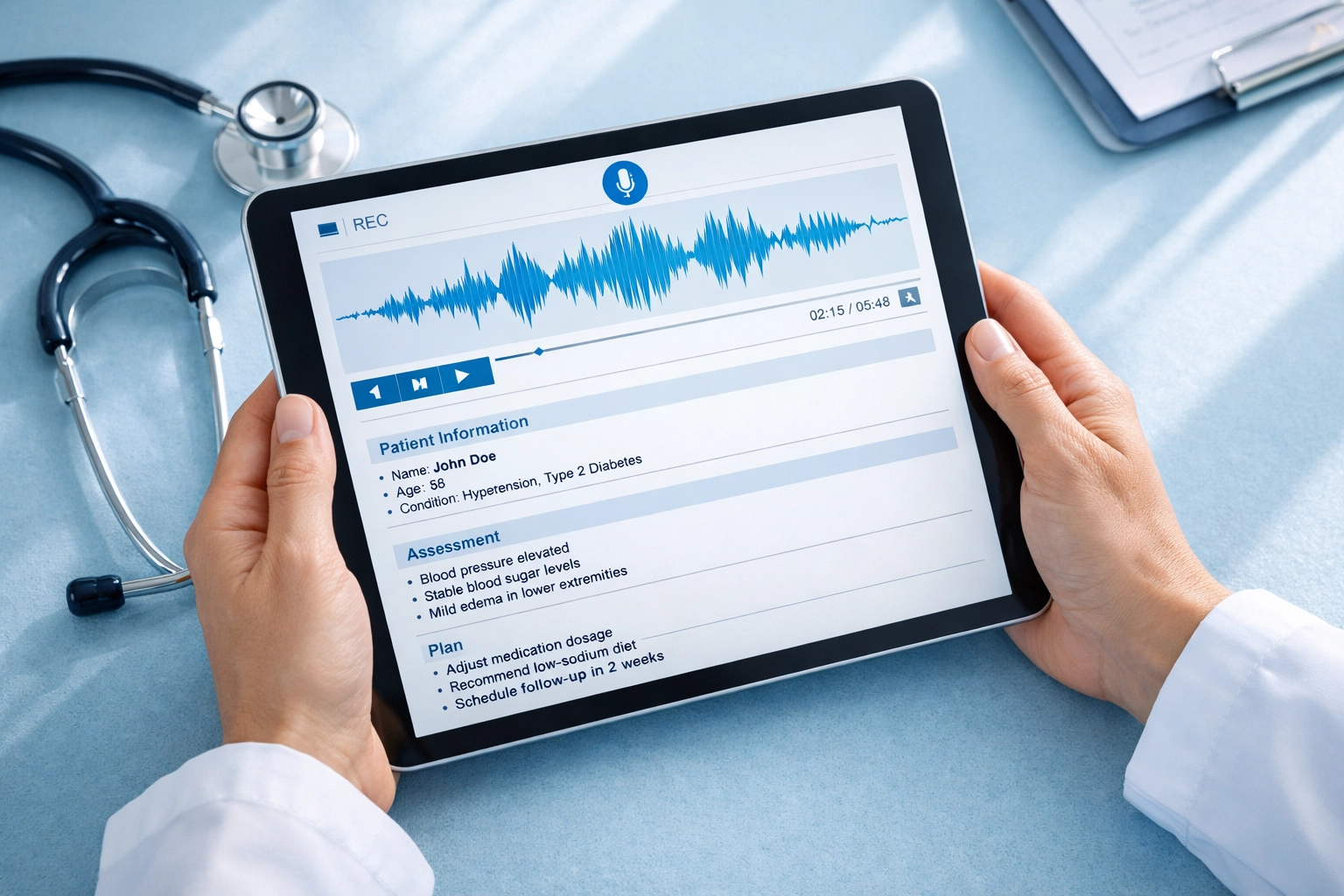
Stop trying to remember visit details hours later. The best clinical documentation improvement software captures information during the patient encounter, through voice, not keyboard.
Here's what this looks like in practice:
Speak naturally during the visit: An AI SOAP note generator listens and structures your thoughts into proper clinical notes
No more mental gymnastics: You're not trying to remember what you said while typing later
Get back 2-3 hours per day: That's the average time clinicians save by ditching manual typing
One family medicine physician told us: "I used to stay until 8pm finishing charts. Now I'm done by 5:30pm, and my notes are actually better because I'm documenting in the moment."
Step 2: Let AI Handle Medicare Compliance (Before You Submit)
Medicare audits fail for predictable reasons:
Missing required elements
Incomplete medical necessity justification
Documentation that doesn't support the billing code
Late submissions (more than 24-48 hours after service)
The old way: You finish a note, submit it, and hope for the best. If something's wrong, you find out weeks later during a claim denial.
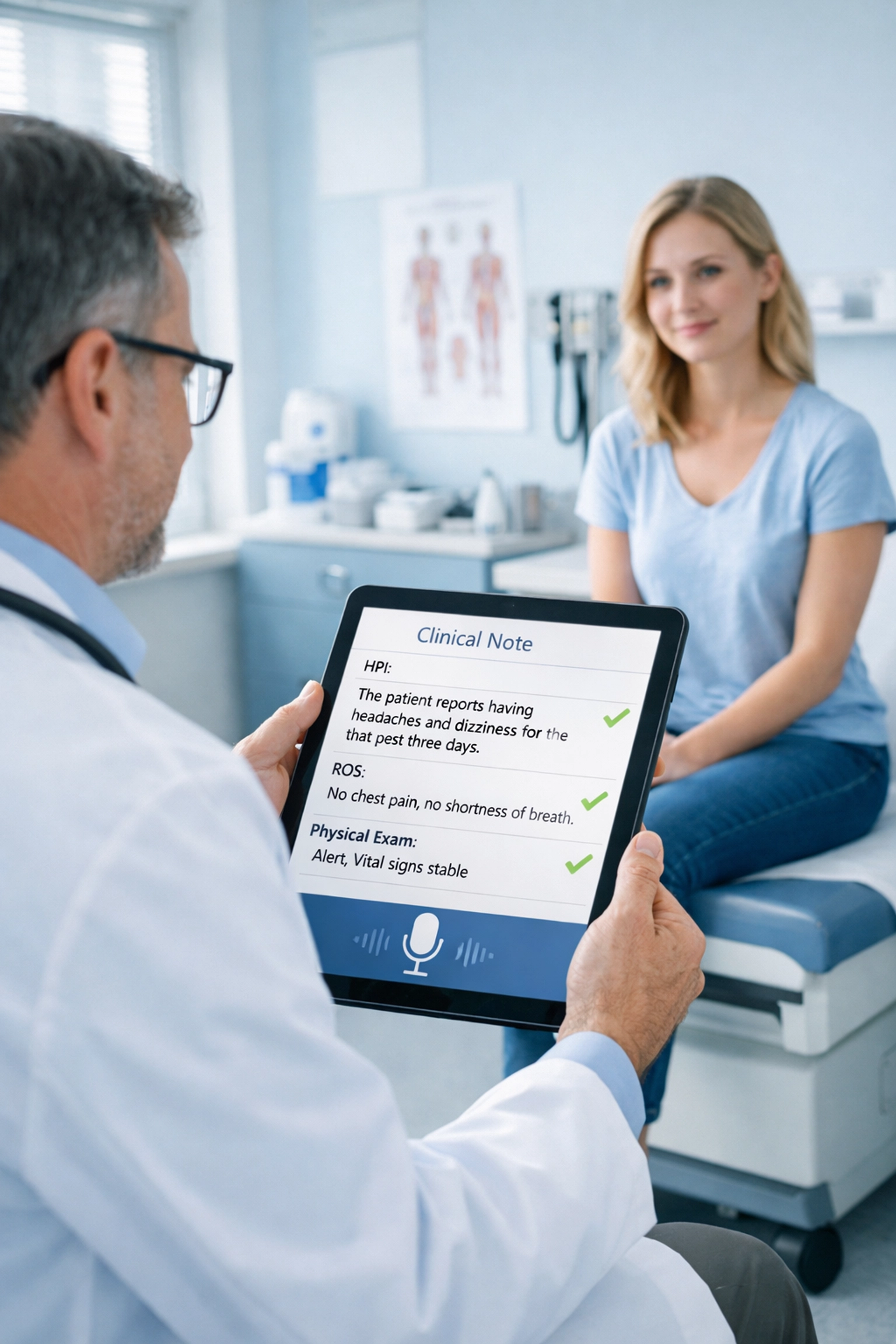
The new way: Home health documentation software with live validation checks your notes as you write them.
Real-time clinical decision support flags issues immediately:
"This diagnosis requires additional justification for medical necessity"
"Missing required element for 42 CFR 484 compliance"
"This level of service needs more detailed decision-making documentation"
You fix it in 30 seconds instead of resubmitting the entire claim later. That's how you hit 99% Medicare compliant documentation without the stress.

What CMS Actually Changed (And How to Use It)
CMS's Patients over Paperwork Initiative eliminated several documentation requirements that were wasting your time:[^1][^2]
You no longer need to:
Reference specific page numbers in certification statements
Document counseling percentages for time-based E/M coding
Write separate duration statements for home health recerts
Submit DME proof of delivery unless specifically required
You CAN now:
Choose either total time or medical decision-making for E/M codes (not both)
Have teaching physicians verify student documentation instead of re-documenting everything
These changes save 15-30 minutes per complex note. But here's the catch: you need to actually implement them consistently. That's where predictive analytics in healthcare comes in, smart software that adapts to the new rules automatically.
The Audit-Proof Documentation Checklist
Want to never worry about Medicare audits again? Here's what every note needs:
✅ Completed within 24-48 hours of service Late documentation is the #1 audit red flag. Period.
✅ Clear medical necessity justification Don't just say "patient needs PT." Explain why, functional deficits, safety concerns, specific goals.
✅ Accurate diagnosis codes that support your treatment plan Your documentation should tell a cohesive story from diagnosis to intervention.
✅ Proper service level documentation If you're billing a high-complexity visit, your note needs to reflect high-complexity decision-making.
✅ All required elements for your service type Home health? Include homebound status. Teaching setting? Verify attending oversight.
AI clinical documentation handles most of these automatically. It's like having a compliance officer reviewing every note before it goes out, except it happens in real-time, not after the fact.
Real Results: What 70% Time Reduction Actually Looks Like
Let's get specific about what you can expect:
Before:
3 hours/day on documentation
15-20 hours/week total
Regular claim denials requiring rework
Weekend charting catch-up
After (with clinical documentation improvement software):
45 minutes/day on documentation (70% reduction)
4-5 hours/week total
15-25% improvement in quality scores
No weekend work
That's an extra 10-15 hours per week. What would you do with that time? See more patients? Actually take a lunch break? Leave work before 7pm?
One nurse practitioner in our network said: "I used to dread Mondays because of the documentation pile-up. Now I'm caught up by Tuesday morning, and my compliance scores are the highest they've ever been."
Common Mistakes That Slow You Down (And How to Fix Them)
Mistake #1: Waiting until end-of-day to document Fix: Use medical dictation software during or immediately after each visit. Your memory is sharpest in the moment.
Mistake #2: Over-documenting to be "safe" Fix: Focus on clinical relevance, not volume. Medicare wants accuracy, not essays. Modern AI SOAP note generators help you hit the right detail level automatically.
Mistake #3: Using generic templates that don't match your patients Fix: Smart documentation tools learn from your patterns and suggest clinically appropriate details based on the actual encounter.
Mistake #4: Not checking compliance until submission Fix: Enable real-time validation so you catch issues immediately, not during an audit.

The Technology That Makes This Possible
You might be wondering: "Is this just another tool I need to learn?"
Fair question. Here's the difference: modern AI clinical documentation integrates with your existing workflow. You don't need to change how you practice, the technology adapts to you.
Key features that actually matter:
Voice-first interface: Talk naturally, get structured notes
Live Medicare compliance validation: Catch issues before submission
Predictive analytics in healthcare: Learn from your documentation patterns to get smarter over time
One-click SOAP generation: From conversation to complete note in seconds
And no, you don't need to be tech-savvy. If you can use a smartphone, you can use this.
Your Next Steps: From Overwhelmed to In Control
Here's how to make this real for your practice:
Test your current speed: Track how long you spend on documentation this week (be honest)
Try a 14-day free trial of modern home health documentation software at caremetricai.com
Compare your time after one week: Most clinicians see 40-50% time savings within the first week
Scale what works: Once you see the difference, expand to your full patient panel
The goal isn't perfection on day one. It's consistent improvement that compounds over time.
Bottom Line: You Can Save Time AND Pass Audits
Reducing documentation time by 70% isn't about cutting corners: it's about working smarter with tools built specifically for 42 CFR 484 documentation requirements and real-world clinical workflows.
When you combine medical dictation software with real-time clinical decision support, you get:
2-3 hours back in your day
99% Medicare compliant documentation
15-25% better quality scores
Zero documentation-related weekend work
The clinicians who are winning aren't working harder: they're using better tools.
Ready to see what 10 extra hours per week feels like? Start your 14-day free trial at caremetricai.com and discover how much easier documentation can be when you have AI in your corner.
Comments