.png)


How to Create Audit-Proof SOAP Notes in 5 Steps
Let's be honest: nothing strikes fear into a clinician's heart quite like the word "audit." You've done the work, provided excellent patient care, and documented everything. But was it enough? Did you miss something that could get your claim denied?
The good news? Creating audit-proof SOAP notes isn't rocket science. It just requires a systematic approach that covers all the bases Medicare auditors are looking for. Even better news? An AI SOAP note generator can help you hit every single requirement without adding hours to your workday.
In this guide, we'll walk through five practical steps to make your documentation bulletproof. Whether you're a nurse practitioner, physician, or home health clinician, these strategies will help you document with confidence and keep those audit worries at bay.
Why Audit-Proof Documentation Matters
Before we dive into the steps, let's talk about what's at stake. Medicare audits aren't just inconvenient: they can result in claim denials, recoupment demands, and even fraud investigations if documentation consistently falls short.
The most common reasons for audit failures include:
Inadequate progress documentation
Missing required elements
Vague or unmeasurable goals
Insufficient medical necessity justification
The pattern here? It's almost never about the care you provided. It's about how you documented that care. Let's fix that.

Step 1: Document Specific Objective Measurements
Vague observations are audit kryptonite. When your Objective section reads like "patient appears improved" or "mobility better today," auditors have nothing concrete to evaluate: and that's a red flag.
Instead, record quantifiable data that tells a clear story:
Range of motion (ROM) in specific degrees (e.g., "knee flexion improved from 85° to 102°")
Manual muscle testing (MMT) grades using standardized scales
Pain scale readings with the 0-10 scale
Vital signs with specific numbers
Functional measurements like distances walked or time to complete tasks
This objective data serves two critical purposes. First, it proves your patient is actually progressing (or explains why they're not). Second, it justifies why continued treatment is necessary.
Pro tip: An AI SOAP note generator can prompt you for these specific measurements during documentation, ensuring you never accidentally skip them. Tools with automated quality scoring will flag notes that lack sufficient objective data before you even submit.
Step 2: Describe Specific Interventions with Skilled Vocabulary
Here's where many clinicians unknowingly shoot themselves in the foot. Writing "therapeutic exercise" or "gait training" tells an auditor nothing about the skilled care you actually provided.
Auditors need to see that a licensed professional's expertise was required: not just that someone supervised basic activity. The difference is in the details:
Instead of this: "Performed therapeutic exercises for 15 minutes."
Write this: "Facilitated progressive resistance exercises targeting quadriceps strengthening using 3-lb ankle weights, 3 sets of 10 repetitions. Cued patient on proper form to prevent compensatory hip hiking. Modified exercise difficulty based on observed fatigue at rep 8 of final set."
See the difference? The second version demonstrates:
Specific exercises performed
Equipment and resistance levels used
Skilled techniques (facilitated, cued, modified)
Clinical reasoning in real-time
Document the time spent on each timed service to support your billing codes. This level of detail proves you provided individualized, licensed-level care rather than routine activity that an aide could supervise.
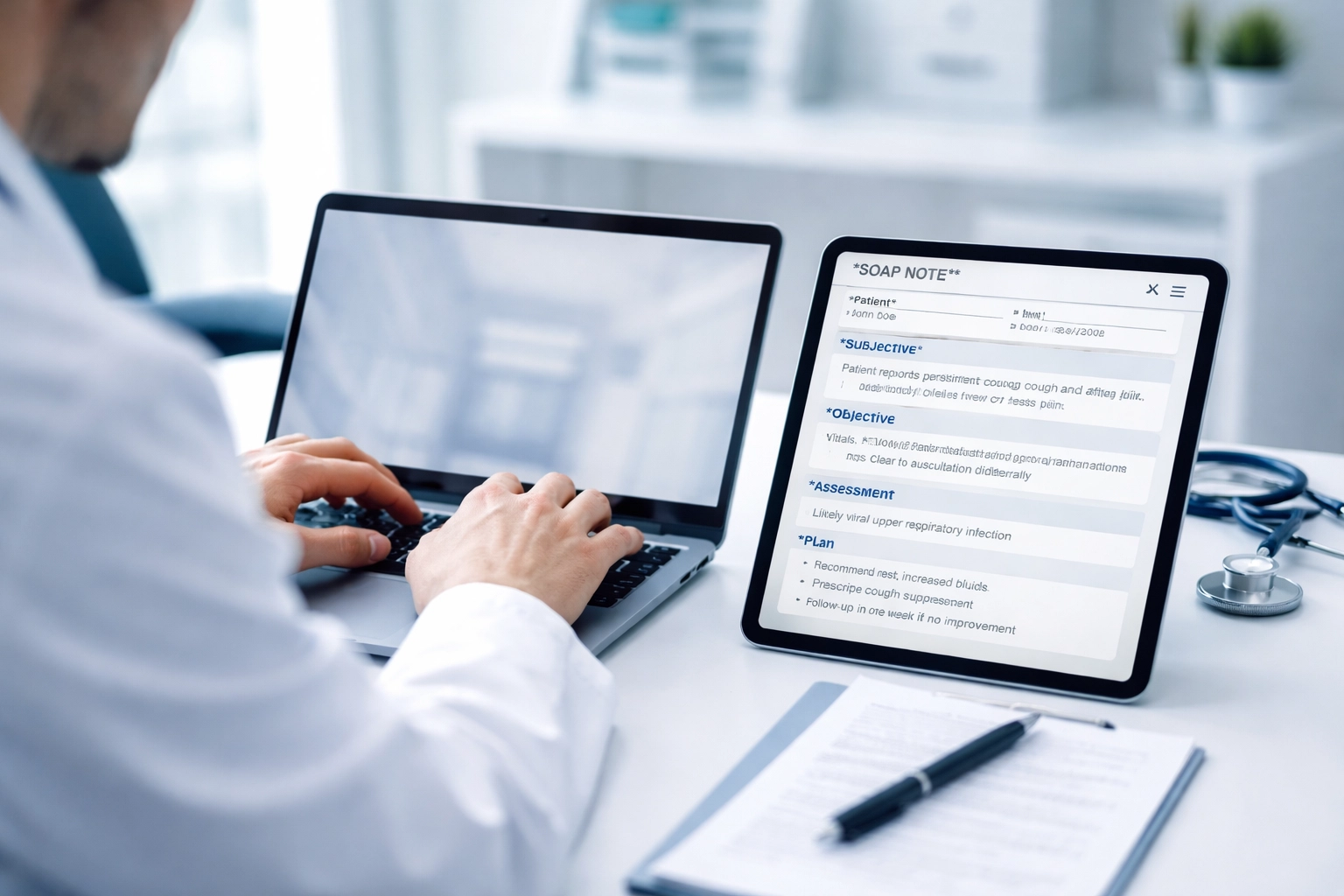
Step 3: Document Patient Response and Progress Visit-to-Visit
Every single note should show measurable changes from the previous session. This is non-negotiable for Medicare compliance.
Record improvements in:
ROM gains or maintained function
Pain reduction patterns
Strength improvements
Better movement quality or coordination
Increased independence with functional tasks
Here's a critical warning: avoid copy-paste documentation at all costs. When auditors see identical notes across multiple visits, they immediately assume one of two things: either you're not providing individualized treatment, or you're not actually assessing the patient each visit. Neither interpretation ends well for you.
Each note must demonstrate why the patient still needs skilled care. Even if progress is slow, document the specific barriers and your clinical reasoning for continuing treatment.
This is another area where an AI SOAP note generator shines. Modern tools can compare your current note against previous visits and alert you if the documentation looks too similar or lacks clear progression indicators. That's the power of automated quality scoring working in the background.
Step 4: Justify Medical Necessity and Skilled PT Need
This step answers the auditor's biggest question: Why does this patient need a licensed clinician right now?
Your documentation must establish a clear chain:
The functional limitation (chief complaint and how it impacts daily life)
The skilled techniques applied (what you did that requires professional expertise)
How those techniques address the specific impairment (your clinical reasoning)
Every note must prove that maintenance is not occurring and that progress toward meaningful goals continues. If a patient has plateaued, document why continued skilled care is still necessary: perhaps to prevent regression or to address a new complication.
For home health clinicians specifically, ensuring 42 CFR 484 compliance adds another layer of requirements. Your documentation needs to clearly connect services to the physician's plan of care and demonstrate homebound status.
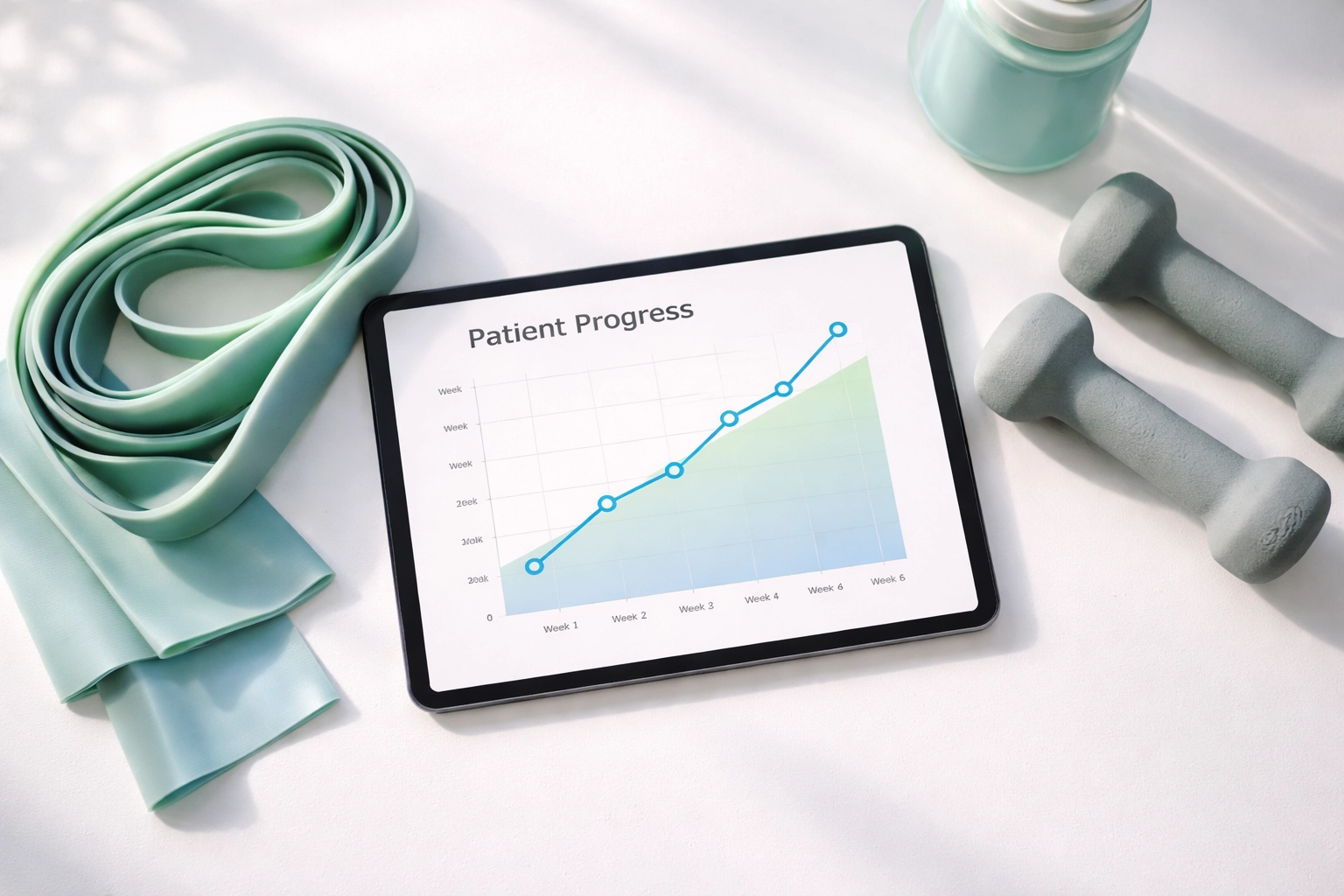
Step 5: Ensure Completeness with Proper Documentation Standards
The final step is essentially a checklist: but it's where many claims get denied for simple, avoidable oversights.
Verify every note includes:
✅ Signature and date (seems obvious, but missing signatures are a top denial reason)
✅ Time stamp matching date of service
✅ Consistency with the plan of care
✅ Specific, measurable goals with target dates
✅ Discharge criteria clearly stated
✅ Home exercise program (HEP) compliance status
Language Matters Too
Avoid red-flag phrases that auditors are trained to spot:
Avoid This | Use This Instead |
"Tolerated treatment well" | Specific patient response with objective measures |
"Patient complains of pain" | "Patient reports pain at 6/10 in left knee" |
"Continue current plan" | Specific goals and interventions for next visit |
"No change" | Document specific assessments performed and findings |
Finally, complete your documentation within 24 hours while details are fresh. Late documentation is both less accurate and raises audit suspicions.
How an AI SOAP Note Generator Makes This Easier
Following these five steps manually is absolutely possible: clinicians have been doing it for years. But it's also time-consuming and mentally exhausting, especially after a long day of patient care.
This is exactly why so many practices are turning to an AI SOAP note generator to streamline the process. Here's what modern AI documentation tools can do:
Real-time compliance checking flags missing elements before you finish the note
Automated quality scoring rates your documentation against Medicare standards
Smart prompts ensure you capture all required objective measurements
Voice dictation lets you document naturally while the AI structures it properly
Progress tracking compares notes against previous visits to highlight changes
The result? Documentation that's audit-ready in a fraction of the time. Many clinicians report saving 2+ hours daily on documentation alone.
If you're curious how this works in practice, check out our Ultimate Guide to AI SOAP Note Generators for a deeper dive.
Ready to Make Your Documentation Audit-Proof?
Creating audit-proof SOAP notes comes down to specificity, completeness, and demonstrating medical necessity in every single note. Follow these five steps consistently, and you'll dramatically reduce your audit risk while actually improving patient care documentation.
But if you're tired of spending your evenings catching up on charts and second-guessing whether you covered everything, it might be time to let technology help.
CareMetric AI combines intelligent documentation assistance with automated quality scoring to help you create audit-proof notes in minutes: not hours. Our AI SOAP note generator handles the compliance details so you can focus on what matters most: your patients.
👉 Start your 14 day free trial and see how stress-free documentation can be.
Comments