.png)


The Future of 42 CFR 484: How AI Ensures Home Health Agencies Stay Compliant
- kdeyarmin
- Jan 30
- 5 min read
If you run a home health agency, you already know that 42 CFR 484 isn't just another regulation: it's the rulebook that determines whether you stay in the Medicare game or get sidelined. And let's be honest: keeping up with every requirement while also delivering quality patient care can feel like juggling flaming torches while riding a unicycle.
But here's the good news. Artificial intelligence is changing the compliance landscape in ways that make staying on the right side of 42 CFR 484 not just possible, but actually manageable. Let's dive into what this regulation requires, where agencies typically stumble, and how AI-powered live validation is becoming the safety net every home health agency needs.
What Exactly Is 42 CFR 484?
42 CFR 484 is the federal regulation that sets the Conditions of Participation (CoPs) for home health agencies that want to participate in Medicare and Medicaid programs. Think of it as the comprehensive blueprint that outlines everything from patient rights to clinical record requirements.
The regulation is organized into three main subparts:
General Provisions – The foundational rules and definitions
Patient Care – Standards for assessments, care planning, and service delivery
Organizational Environment – Requirements for agency operations and administration
Since the major overhaul that took effect in January 2018, the CoPs have placed even greater emphasis on patient-centered care, comprehensive assessments, and robust documentation practices.

The Key Compliance Areas That Keep Agencies Up at Night
Let's break down the areas where home health agencies need to be especially vigilant:
Patient Rights and Notifications
Under 42 CFR 484, agencies must provide verbal notice of patient rights by the second visit and written notice within four business days of the initial evaluation. Miss this window, and you're already out of compliance before care has really begun.
Comprehensive Assessments
Every patient needs a thorough evaluation that covers:
Psychosocial status
Functional capabilities
Cognitive condition
Patient strengths and goals
Caregiver availability and willingness to assist
This isn't a checkbox exercise. These assessments drive the entire care plan, and incomplete documentation here can unravel everything downstream.
Care Planning and Coordination
Communication with all physicians involved in a patient's care is mandatory. Orders need to be coordinated, and the care plan must reflect input from the entire care team. Documentation gaps in this area are among the most common reasons for Medicare claim denials.
Home Health Aide Supervision
If your agency uses home health aides, onsite supervisor visits are required at least every 14 days. That's a tight timeline, and missing even one visit can trigger compliance issues.
Clinical Records Accessibility
Patients have the right to access their clinical records upon request. Your documentation system needs to support this: readily and without jumping through hoops.
For a more detailed breakdown of these requirements, check out our Home Health Clinician's Guide to 42 CFR 484 Compliance in 2026.
Where Agencies Typically Fall Short
Even well-intentioned agencies with dedicated staff run into compliance problems. Here's why:
Documentation happens after the fact. Clinicians are busy. They're focused on patient care during visits, and documentation often gets pushed to the end of the day: or later. By then, details get fuzzy, and notes become incomplete.
Manual processes can't keep up. Tracking notification timelines, aide supervision schedules, and assessment completeness across dozens or hundreds of patients is incredibly difficult with spreadsheets and paper-based systems.
Regulations evolve, but training lags. CMS updates guidance regularly. Keeping every team member current on the latest requirements is a full-time job in itself.
Human error is inevitable. Even experienced clinicians make mistakes. A missed field, an incomplete assessment, or a vague progress note can all lead to claim denials or audit findings.
The result? Agencies often don't discover compliance gaps until an audit reveals them: by which time the damage is done.
How AI Live Validation Changes Everything
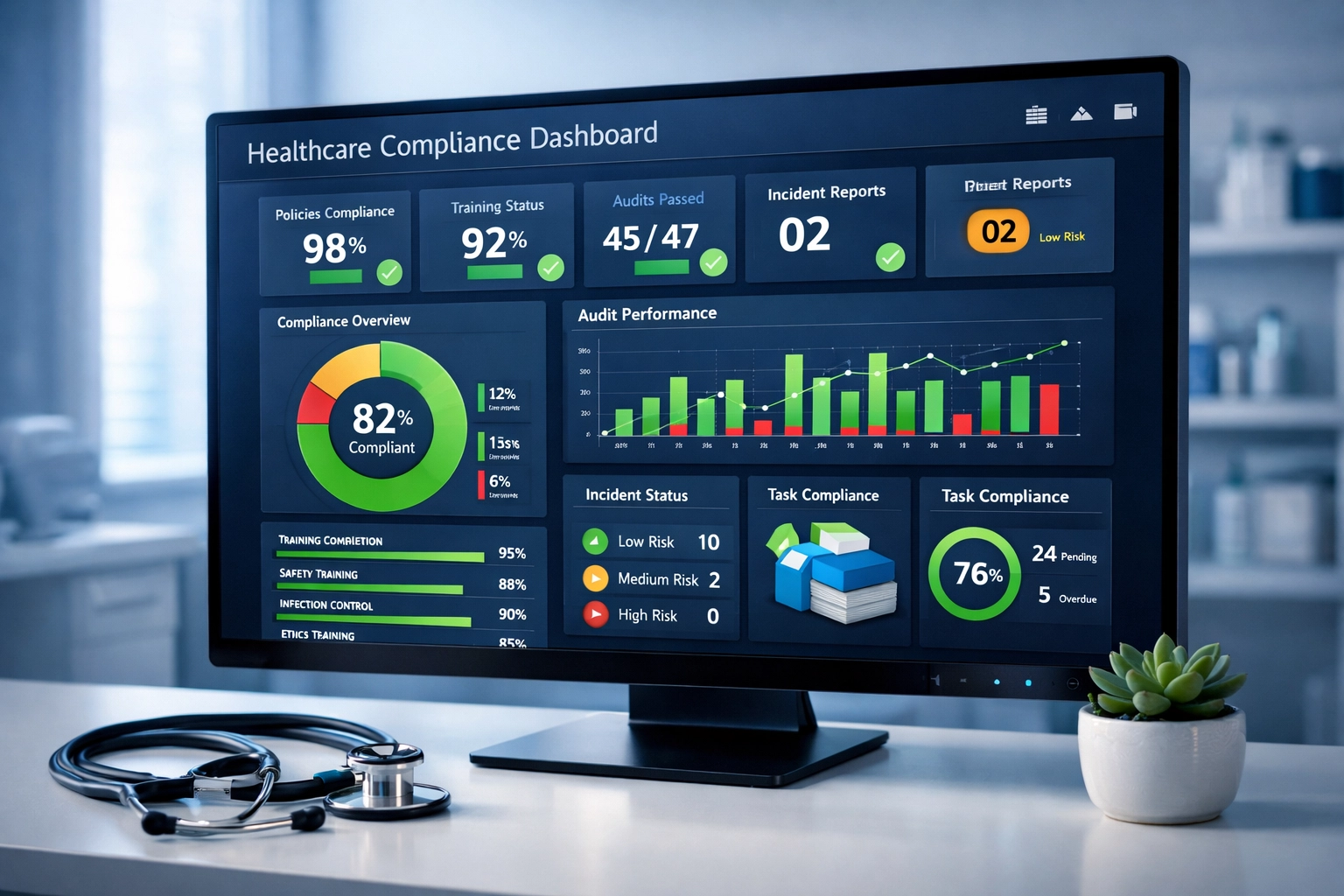
This is where AI steps in as your compliance safety net. Instead of discovering problems after the fact, AI-powered live validation catches issues in real time: while clinicians are still documenting.
Real-Time Compliance Checking
Imagine a system that reviews every note as it's being created and flags missing elements before the clinician moves on. That's exactly what live validation does. If an assessment is missing the patient's cognitive status or a care plan lacks required physician coordination notes, the system alerts the clinician immediately.
No more hoping someone catches the error during a chart review. No more scrambling to fix documentation weeks later when memories have faded.
Want to see how this works in practice? We've written about why real-time compliance checking is the secret to stress-free audits.
Intelligent Documentation Prompts
AI doesn't just flag problems: it guides clinicians toward complete documentation. Smart prompts remind users of required fields, suggest appropriate terminology, and ensure that every note meets Medicare's stringent requirements.
This is particularly valuable for complex medical terminology and voice dictation scenarios. Learn more about how AI Smart Notes handle complex medical terminology.
Automated Timeline Tracking
Remember those 14-day aide supervision visits? The four-business-day window for written patient rights notices? AI systems can track these deadlines automatically and alert supervisors before a deadline is missed: not after.
Pattern Recognition Across Your Organization
AI doesn't just look at individual notes. It can identify patterns across your entire agency. Maybe one location consistently struggles with comprehensive assessments. Maybe certain clinicians tend to skip functional status documentation. AI surfaces these trends so you can address them proactively through targeted training.
The ROI of AI-Powered Compliance
Let's talk numbers, because compliance isn't just about avoiding penalties: it's about protecting your revenue.
Reduced claim denials. When documentation is complete and compliant from the start, claims go through cleanly. Fewer denials mean faster payments and less time spent on appeals.
Lower audit risk. Agencies with consistent, complete documentation are less likely to be flagged for audits. And when audits do happen, they go much smoother.
Time savings for clinicians. Counterintuitively, AI-assisted documentation often takes less time than manual processes. Clinicians spend less time wondering what to include because the system guides them through it.
Reduced administrative burden. Compliance officers and QA teams can focus on strategic improvements rather than chasing down documentation errors.
If you're curious about the broader financial impact, our post on how clinical documentation improvement software boosts quality scores dives deeper into the numbers.
Looking Ahead: What's Next for 42 CFR 484 Compliance
CMS isn't slowing down on regulatory updates. If anything, the push toward value-based care and patient outcomes means documentation requirements will only become more stringent.
The agencies that thrive will be those that treat compliance not as a burden but as a foundation for quality care. And increasingly, that means leveraging technology that makes compliance the default: not an afterthought.
AI-powered documentation tools are no longer a luxury. They're becoming essential infrastructure for any home health agency that wants to scale sustainably while maintaining Medicare certification.
Ready to Make Compliance Effortless?
At CareMetric AI, we've built live validation directly into our documentation platform. Every note, every assessment, every care plan gets checked against 42 CFR 484 requirements in real time.
No more audit anxiety. No more late-night documentation fixes. Just clean, compliant records that protect your agency and your patients.
Start your 14-day free trial today and see how AI can transform your compliance workflow.
Comments