.png)


Navigating MIPS and MACRA: How AI Simplifies Quality Measure Reporting
If you've ever felt like MIPS and MACRA reporting is a full-time job on top of your actual full-time job, you're not alone. Quality measure reporting has become one of the most time-consuming administrative tasks for clinicians: and the stakes couldn't be higher. Miss the mark, and you're looking at payment adjustments that can seriously impact your practice's bottom line.
The good news? Clinical documentation improvement software powered by AI is changing the game. What used to require dedicated staff, countless hours, and constant stress can now be automated, accurate, and actually manageable. Let's break down how this works and why it matters for your practice.
The MIPS and MACRA Reality Check
First, a quick refresher. The Medicare Access and CHIP Reauthorization Act (MACRA) replaced the old Sustainable Growth Rate formula with a new payment system. Under MACRA's umbrella, the Merit-based Incentive Payment System (MIPS) now determines payment adjustments for most Medicare clinicians based on four performance categories:
Quality (weighted at 30%)
Cost (30%)
Improvement Activities (15%)
Promoting Interoperability (25%)
That Quality category? It requires reporting on six measures: and if you're in a small practice or specialty with limited applicable measures, that alone can feel like navigating a maze blindfolded.
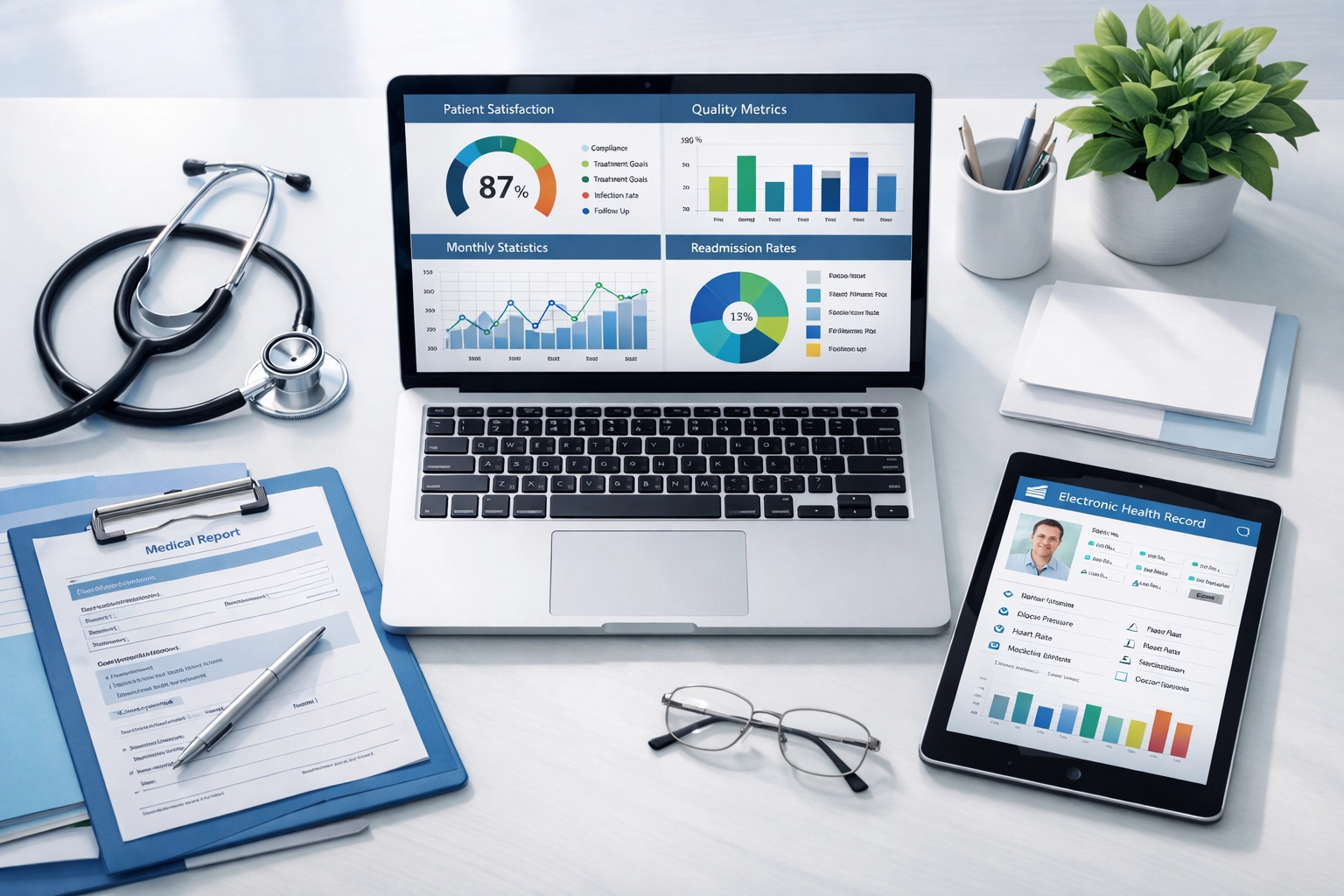
The traditional approach involves manually extracting data from patient charts, validating it against measure specifications, submitting through registries or EHRs, and then crossing your fingers that everything was coded correctly. One small documentation gap can torpedo your entire quality score.
Where Traditional Reporting Falls Short
Here's what most practices deal with when tackling quality measure reporting the old-fashioned way:
Manual data extraction is error-prone. When staff members comb through charts to find qualifying patients and documented care, human error is inevitable. A missed checkbox here, an incomplete note there: it all adds up to lost points.
Measure specifications change constantly. CMS updates quality measures annually. What qualified last year might not count this year, and keeping track of these changes while treating patients is nearly impossible.
Real-time feedback doesn't exist. You often don't know if your documentation meets measure criteria until months later during the reporting period: by which point it's too late to fix gaps.
Resource drain is significant. Many practices hire dedicated staff just to manage MIPS reporting, or they pay expensive consultants to handle submissions. Either way, you're diverting resources away from patient care.
Submission deadlines create panic mode. When the reporting period closes, practices scramble to gather data, often working nights and weekends to meet CMS deadlines.
How Clinical Documentation Improvement Software Changes Everything
This is where AI-powered clinical documentation improvement software enters the picture: and why it's becoming essential rather than optional for practices serious about maximizing their MIPS performance.

Automated Compliance Checks in Real Time
Instead of discovering documentation gaps months later, modern AI systems validate your notes against quality measure specifications as you document. The software knows the exact criteria for each measure you're targeting and flags missing elements immediately.
For example, if you're documenting a diabetic patient visit and haven't recorded their HbA1c results yet, the system alerts you right there in the workflow. You can address it while the patient is still in front of you: not three months later when you're trying to close out your quality reporting.
This real-time validation is a game-changer. It transforms quality reporting from a retrospective headache into an integrated part of your documentation workflow.
Intelligent Measure Selection and Tracking
AI doesn't just help you document better: it helps you strategize smarter. Clinical documentation improvement software can analyze your patient panel and recommend which quality measures give you the best opportunity to maximize your MIPS score based on your actual case mix.
The software tracks your performance against each measure throughout the year, showing you exactly where you stand. Think of it as a GPS for quality reporting: you always know your current position and the best route to your destination.
Automated Data Aggregation and Submission
Remember those hours spent manually extracting data for submission? AI handles that automatically. The software continuously aggregates qualifying encounters, validates data completeness, and even formats submissions according to the specific requirements of your chosen reporting mechanism: whether that's through a registry, your EHR, or the CMS Web Interface.
When the reporting period arrives, instead of scrambling to compile months of data, you're reviewing a submission that's been built incrementally all year long. It's already validated, formatted, and ready to go.

Staying Current with Regulatory Changes
Here's one of the most underappreciated benefits: AI-powered systems update automatically when CMS changes measure specifications. Your software vendor monitors regulatory updates and pushes changes to your system, so you're always compliant with the latest requirements without having to manually research updates or attend seminars on what changed this year.
This is particularly valuable for Promoting Interoperability (formerly Meaningful Use) requirements, which continue to evolve with new security and data exchange mandates.
The Downstream Benefits for Your Practice
Beyond simplifying the mechanics of reporting, clinical documentation improvement software delivers benefits that ripple through your entire practice:
Financial predictability improves. When you can see your MIPS performance in real time, you can project your Medicare payment adjustments with confidence. No more surprises when CMS releases performance feedback months after the reporting period closes.
Clinician satisfaction increases. Doctors didn't go to medical school to become data entry specialists. When AI handles the administrative burden of quality reporting, clinicians can focus on what they do best: treating patients.
Audit risk decreases. Because the software validates documentation against regulatory requirements continuously, your notes are naturally more complete and compliant. If Medicare comes knocking with an audit, you're already in good shape. Learn more about audit-proofing your practice.
Staff productivity multiplies. The team members who used to spend hours on quality reporting can redirect that time to patient care, practice growth initiatives, or other high-value activities.
Making the Transition
If you're still managing MIPS reporting manually: or paying hefty fees to consultants who do: it's worth evaluating how clinical documentation improvement software could work for your practice.
The best solutions integrate seamlessly with your existing EHR, require minimal training, and start delivering value immediately. You're not overhauling your entire workflow; you're augmenting it with intelligence that makes regulatory compliance automatic rather than arduous.

Look for platforms that offer:
Real-time compliance validation against current measure specifications
Intelligent recommendations based on your patient panel
Automated data aggregation and submission support
Regular updates to keep pace with regulatory changes
Comprehensive reporting dashboards so you always know where you stand
The Bottom Line
MIPS and MACRA aren't going anywhere. If anything, value-based payment models are expanding, and quality measure reporting will only become more integral to practice revenue. The question isn't whether to address quality reporting seriously: it's whether to keep doing it the hard way or embrace technology that makes it manageable.
Clinical documentation improvement software powered by AI doesn't just simplify quality measure reporting. It transforms it from a compliance burden into a strategic advantage. You document better, report more accurately, and maximize your MIPS performance without the stress, overtime, and resource drain of traditional approaches.
Your patients deserve your full attention. Your staff deserves workflows that make sense. And your practice deserves Medicare payment adjustments that reflect the quality of care you actually deliver: not the quality of your data entry.
Ready to see how automated compliance checks and intelligent quality reporting can work for your practice? Start your 14-day free trial with CareMetric AI and experience firsthand how AI simplifies the regulatory burden while improving your MIPS performance. No credit card required, no complicated setup: just smarter documentation that works the way you do.
Comments