.png)


How to Choose the Best AI SOAP Note Generator (Compared): Speed, Compliance, and What Actually Matters
- kdeyarmin
- Feb 24
- 5 min read
Let's be real: you didn't go to medical school to become a professional typist. Yet here you are, spending 2-3 hours a day on documentation while your patient schedule keeps growing. You've heard about AI SOAP note generators and medical dictation software, but now you're staring at a dozen different options wondering which one won't leave you with rejected claims and compliance headaches.
Here's the thing everyone gets wrong: choosing the best AI clinical documentation tool isn't about which one is fastest. It's about which one saves you time and keeps you compliant, because what's the point of finishing notes in 30 seconds if Medicare kicks them back two weeks later?
Why "Fast" Documentation Can Cost You More
We've all seen the flashy demos. "Generate a complete SOAP note in 15 seconds!" Sounds amazing, right? But speed means nothing if you're stuck doing rework.
The real math is simple: time saved + compliance = zero resubmits. A properly configured clinical documentation improvement software should reduce your documentation time by about 70% while increasing your compliance rates. When you're looking at tools, ask yourself: does this just transcribe faster, or does it actually understand 42 CFR 484 documentation requirements?

Here's what actually happens with most "fast" AI tools: they transcribe your words perfectly but miss the compliance piece entirely. You finish your note, feel great about those 2 minutes saved, then get a call from your billing department three weeks later because the documentation didn't support medical necessity for Medicare.
The Hidden Cost of Non-Compliant Documentation
Let's talk about what non-compliant documentation actually costs you. It's not just the claim denial, though that's painful enough. It's the cascade:
Time rework: 30-45 minutes per note to fix and resubmit
Revenue delays: 30-60 days waiting for reprocessed claims
Audit risk: Patterns of non-compliance trigger reviews
Mental load: Constantly wondering if your notes will pass muster
The right home health documentation software with Medicare compliant documentation baked in prevents all of this. Tools with live validation against 42 CFR 484 documentation requirements catch issues before you sign off, not after Medicare does.
At CareMetric AI, we've seen practices improve their quality and compliance scores by 15-25% simply by switching to documentation that validates in real-time. That's not because clinicians suddenly became better at their jobs, they were always excellent. They just finally had tools that matched their expertise.
What Actually Matters: The Big Three
After working with hundreds of home health and clinical practices, three factors separate tools that actually work from expensive disappointments:
1. Real-Time Compliance Validation (Not Just HIPAA Checkboxes)
Yes, HIPAA compliance is non-negotiable. But that's table stakes. What you really need is real-time clinical decision support that validates while you document.
Think about it: most tools claim "99% compliance" but that's measured against their own training data, not actual Medicare guidelines. You need something that checks your documentation against current regulatory standards as you work. When a tool achieves 99% Medicare compliance with live validation, that means rejected claims drop to nearly zero.
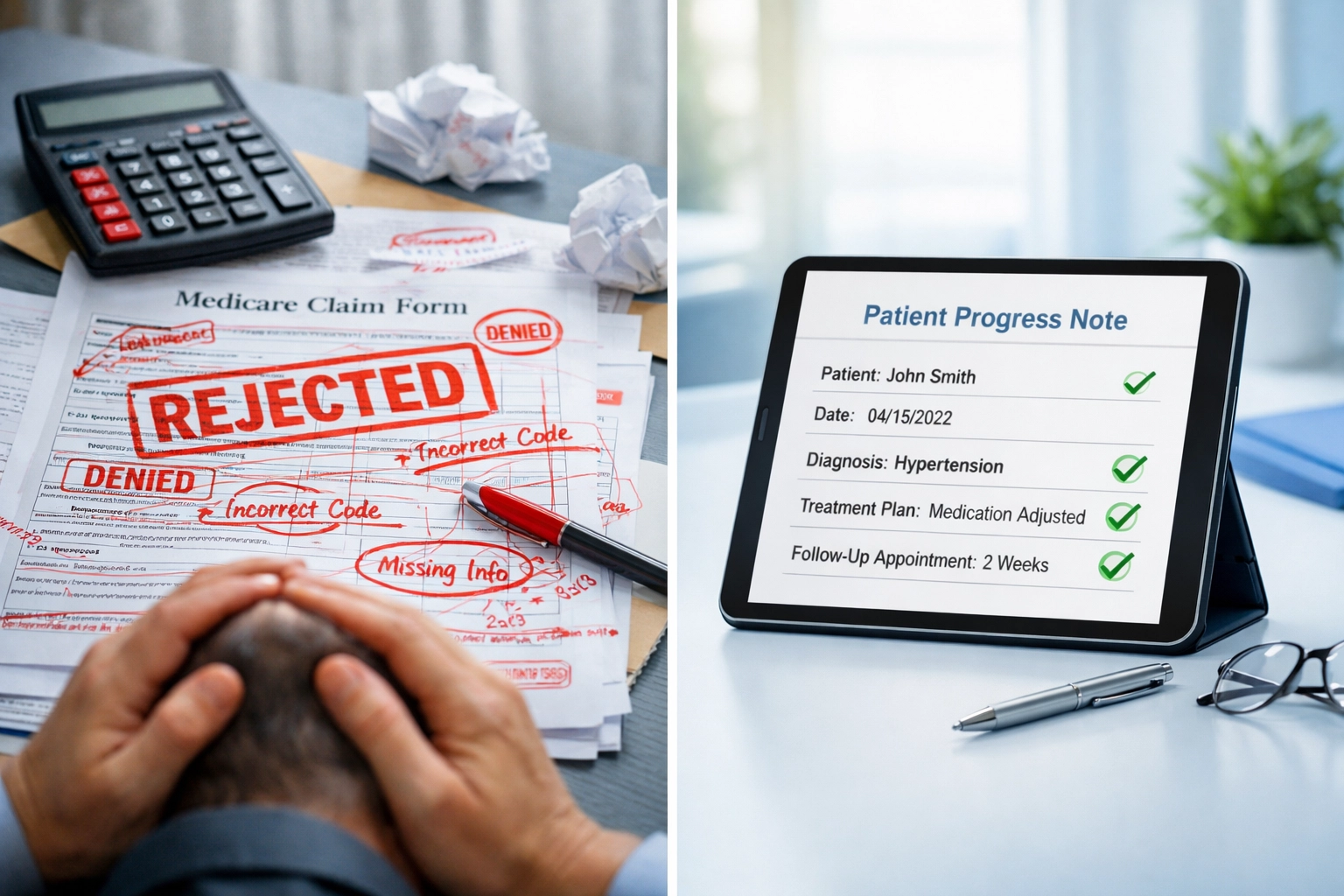
Look for platforms that explicitly state they validate against 42 CFR 484 and other relevant regulations. Generic AI tools don't know the difference between a compliant home health visit note and a hospital progress note: and that difference matters when auditors come calling.
2. EHR Integration That Actually Works
Copy-paste workflows kill the time savings AI promises. You've experienced this: spend 2 minutes generating a perfect note, then spend 8 minutes reformatting it to fit your EHR's quirks.
Deep integration isn't about "exports to PDF." It means the tool talks directly to your EHR, understands your templates, and populates fields automatically. When evaluating medical dictation software, test whether it actually reduces clicks or just shifts work around.
The best AI clinical documentation tools integrate so smoothly you forget they're there. You document naturally, and compliant notes appear in your system without manual intervention.
3. Specialty-Specific Intelligence
Generic AI might work for straightforward cases, but healthcare isn't straightforward. A tool trained on primary care notes won't understand the nuances of mental health documentation or the specific requirements for chiropractic SOAP notes.
Predictive analytics in healthcare only works when the system understands your specialty's patterns. For home health specifically, this means knowing OASIS requirements, understanding homebound status documentation, and catching medication reconciliation gaps.
The Documentation Time Reality Check
Let's ground this in your actual workday. Right now, you're probably spending:
15-20 minutes per note for complex patients
8-12 minutes per note for standard visits
2-3 hours daily on total documentation
Good clinical documentation improvement software should cut this by 70%: bringing those times down to:
5-6 minutes per complex note
3-4 minutes per standard note
Under 1 hour daily for documentation
That's 2-3 hours back in your day. Every single day.
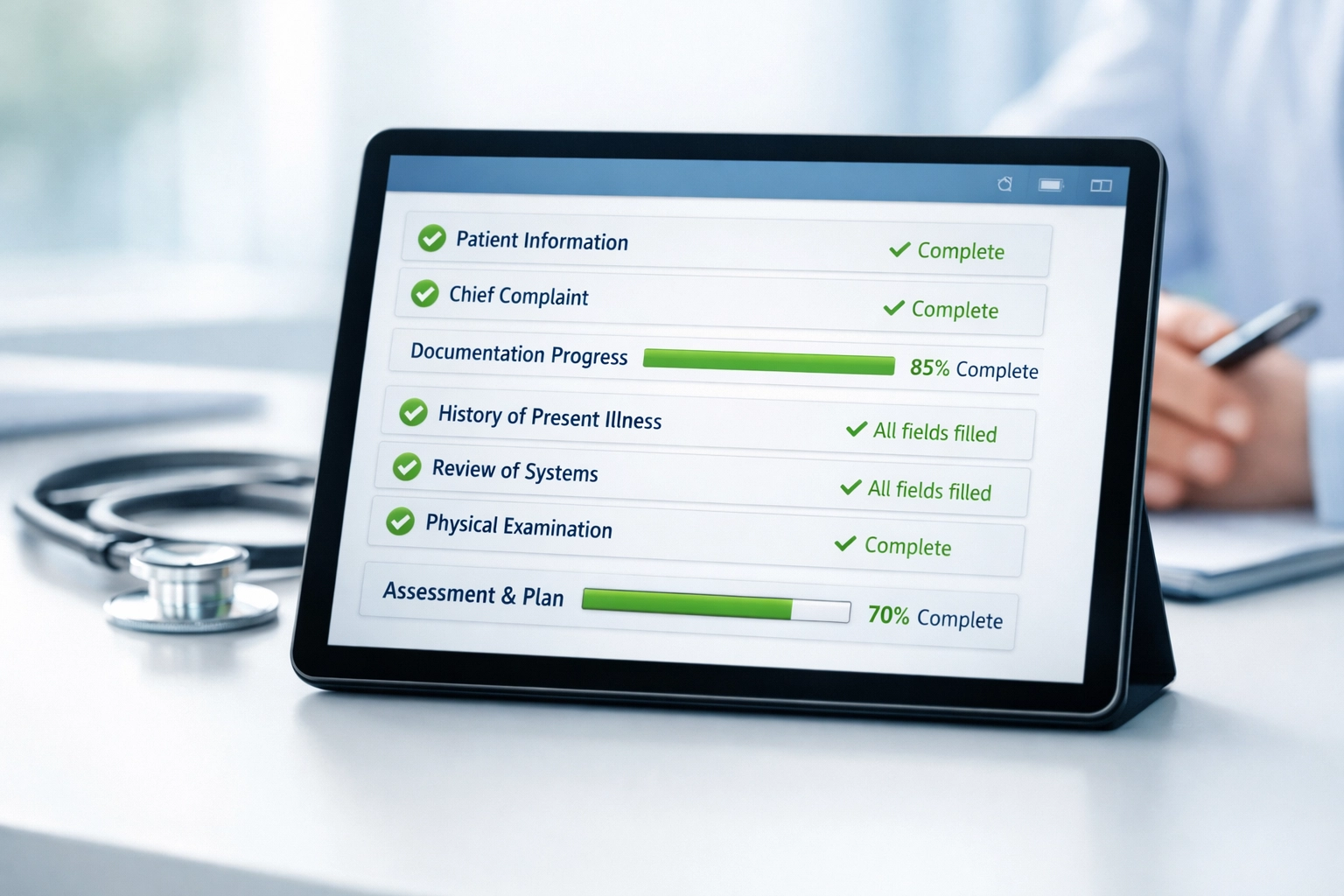
But here's the catch: you only get these results when the tool handles both speed and compliance. Otherwise, you're just moving the time burden from initial documentation to rework and resubmissions.
Questions to Ask Before You Commit
When you're evaluating different AI SOAP note generators, here's your shortlist:
On Compliance:
Does it validate against current Medicare requirements, not just HIPAA?
Can it show actual compliance rates with Medicare claims (not just theoretical accuracy)?
Does it catch common rejection reasons before submission?
On Integration:
Will it work with my specific EHR without copy-paste?
Does it populate all required fields automatically?
Can I customize templates for my specialty and workflows?
On Real-World Use:
What happens when I need to document a complex, multi-problem visit?
Can it handle my specialty's terminology and documentation requirements?
Does it learn from my documentation patterns or give the same generic output every time?
Why CareMetric AI Built It Differently
We built CareMetric AI specifically for home health and clinical providers who were tired of choosing between speed and compliance. Our platform combines medical dictation software with live compliance validation, predictive analytics in healthcare for risk detection, and deep EHR integration: all designed around 42 CFR 484 documentation requirements.
The result? Practices using CareMetric see that 70% reduction in documentation time while improving compliance rates to 99% for Medicare submissions. It's not magic: it's just finally having software that understands both the clinical and regulatory sides of documentation.

Our real-time clinical decision support catches potential issues during documentation, not weeks later during claim review. And because we built it specifically for home health and specialty practices, it understands the nuances that generic AI tools miss.
Your Next Step
Choosing the right AI clinical documentation tool is too important to rush. But it's also too important to keep putting off while you lose 2-3 hours every day to documentation.
Start your 14-day free trial at caremetricai.com and see what it feels like to finish your documentation in under an hour: with confidence that every note meets Medicare compliance standards.
No credit card required. No complicated setup. Just connect your EHR and start documenting. Within a week, you'll wonder how you ever managed without proper home health documentation software that actually understands your work.
Because at the end of the day, the best AI SOAP note generator isn't the one with the most features or the flashiest demo. It's the one that gives you back your time while keeping you compliant: so you can focus on what actually matters: taking care of your patients.
Try CareMetric AI free for 14 days and join hundreds of clinicians who've reclaimed their evenings.
Comments