.png)


Can Your AI SOAP Note Generator Pass an Audit? 7 Red Flags to Watch For
You've finally taken the plunge with an AI SOAP note generator. Documentation time is cut in half, your clinicians are happier, and you're getting home on time for dinner. Life is good.
Then the dreaded audit notice arrives.
Suddenly, those AI-generated notes that seemed perfectly fine are under a microscope. And here's the uncomfortable truth: not all AI documentation tools are built to survive an audit. Some create compliance landmines that won't explode until a Medicare reviewer starts asking questions.
Let's talk about the seven red flags that could tank your audit, and more importantly, how to spot them before they become a problem.
Red Flag #1: Every Note Looks Like a Clone
Pull up five patient charts from the same clinician. Now read the SOAP notes. Do they sound suspiciously similar? Like the AI is just filling in Mad Libs with different names and vital signs?
Template-clone syndrome is one of the fastest ways to fail an audit. Medicare reviewers are trained to spot documentation that looks auto-generated without individualization. When every patient's subjective complaint section reads with the same sentence structure, or the assessment language is identical across cases, it screams "this wasn't actually personalized care."
Real patient encounters are messy and unique. Your documentation should reflect that. A quality AI tool adapts to the specifics of each visit, not just populating the same template with different data points.

Red Flag #2: Medical Necessity is MIA
Here's a scenario that keeps compliance officers up at night: beautifully formatted SOAP notes that completely fail to establish why the visit or service was medically necessary.
Medical necessity isn't just a buzzword, it's the cornerstone of reimbursement. Your documentation needs to clearly connect the patient's condition to the skilled services provided. If your AI is generating notes that describe what happened without explaining why it was required, you're sitting on a ticking compliance bomb.
According to industry data, approximately 20% of medical malpractice cases involve at least one documentation failure. Many of these stem from inadequate justification for treatment decisions. Your AI tool should prompt for, or better yet, automatically extract, the clinical reasoning that supports medical necessity.
Red Flag #3: No Audit Trail to Save You
An auditor asks: "Who accessed this patient record on March 15th, and what changes were made?"
Your answer: "Uh... we're not sure?"
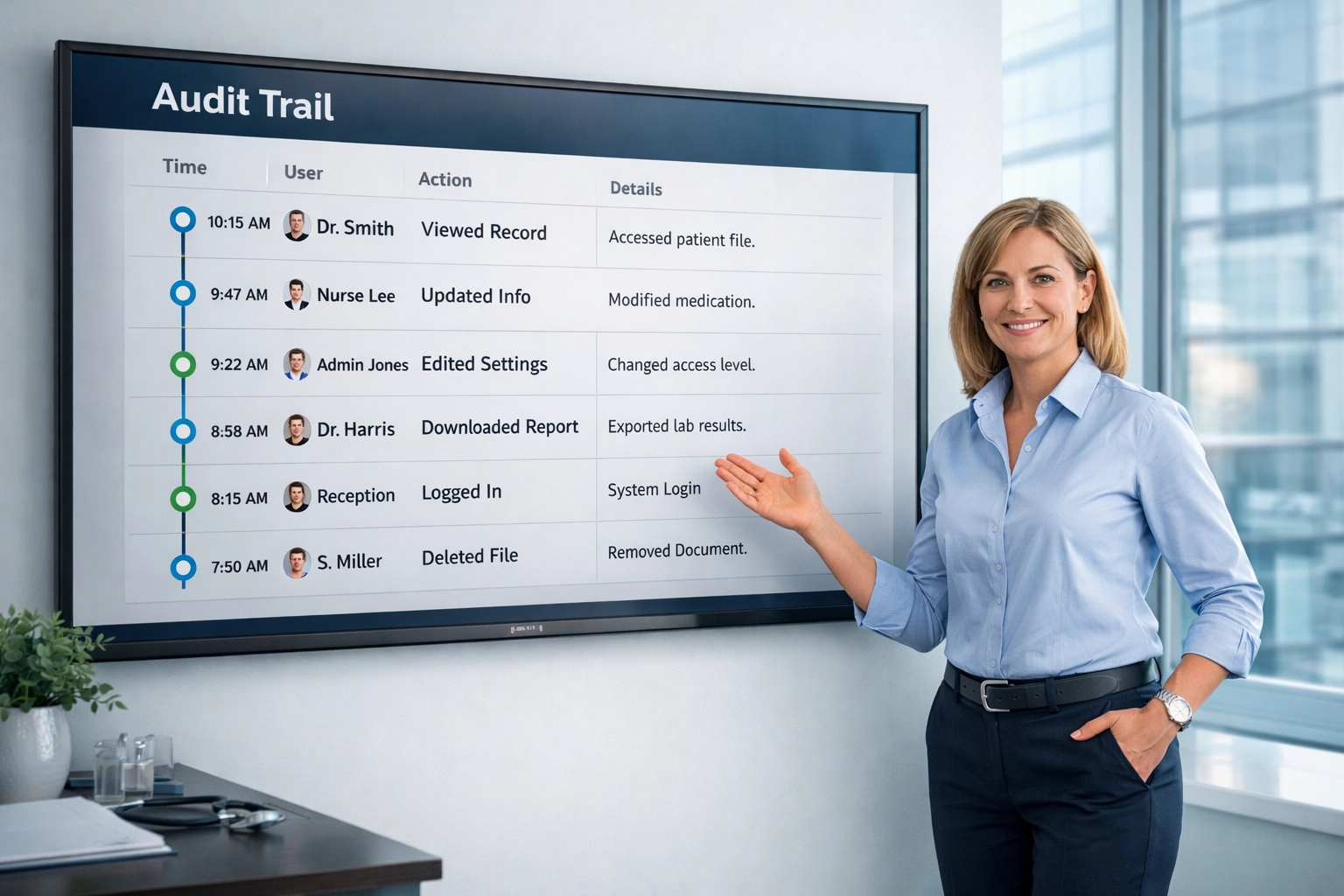
That's a problem. A proper audit trail isn't optional: it's essential proof that your documentation practices meet compliance standards. Every AI SOAP note generator worth its salt should track:
Who created or modified each note
When changes were made
What specific edits occurred
Who accessed patient information
Without this transparency, you can't prove compliance even when your documentation is otherwise solid. It's like having a great security system but no record of who entered the building.
Red Flag #4: The HIPAA Compliance Question Mark
This should be non-negotiable, yet it's shocking how many practices don't verify this until it's too late: Does your AI vendor provide a signed Business Associate Agreement (BAA)?
If the answer is "I don't know" or "I think so," stop reading and go check right now.
Here's what proper HIPAA compliance looks like in an AI documentation tool:
AES-256 encryption for all data transmission and storage
Real-time audio processing without storing recordings on external servers
A properly executed BAA that legally documents data protection responsibilities
Clear policies about PHI handling and retention
Without these elements, you're not just risking audit failure: you're risking massive HIPAA violation penalties. The "we didn't know" defense doesn't hold up well when facing six-figure fines.
Red Flag #5: Critical Details Keep Disappearing
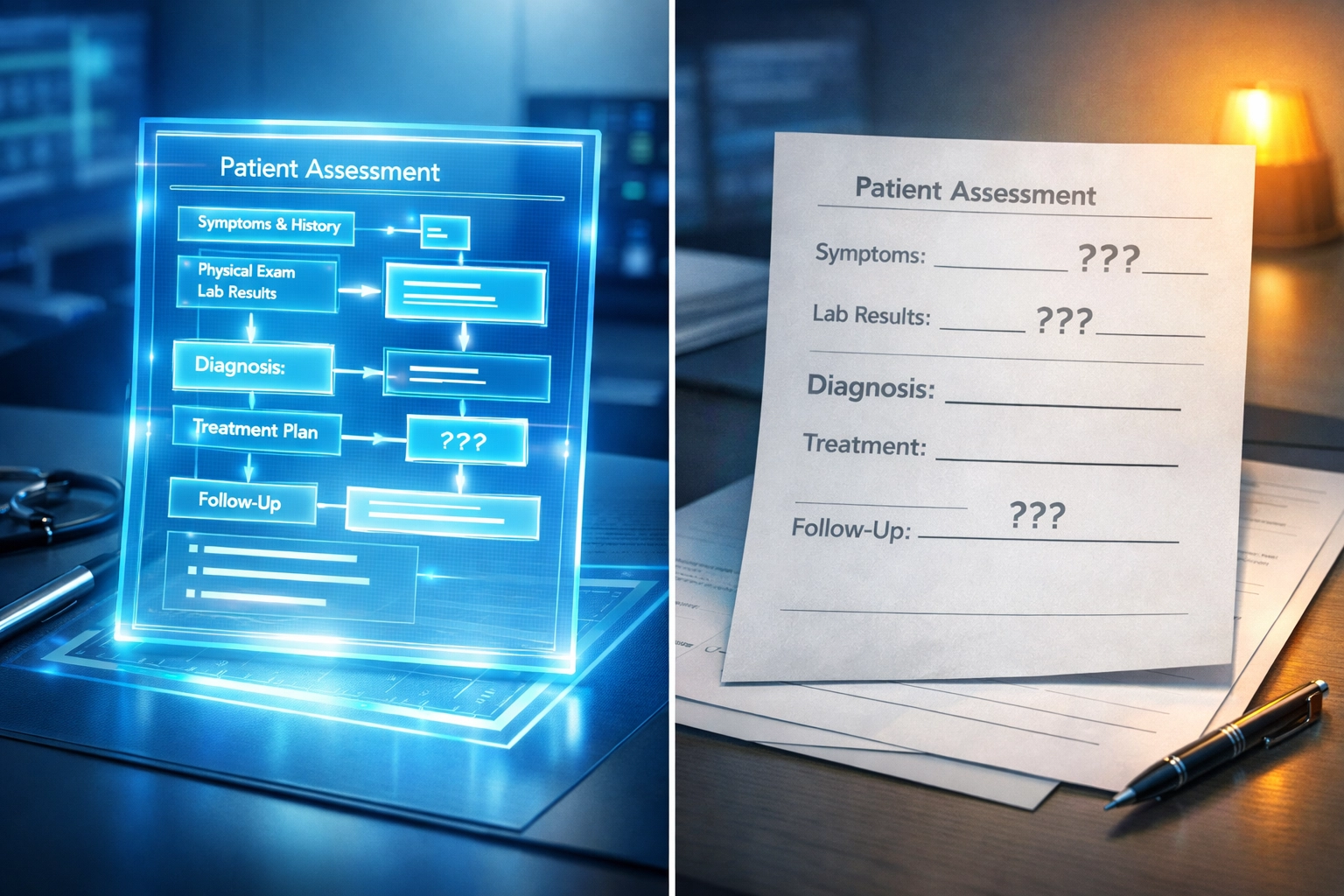
Your clinician dictates a thorough encounter. The AI generates the note. Everything looks fine until an auditor points out that key clinical findings or patient statements somehow didn't make it into the documentation.
Incomplete or inconsistent documentation is both a compliance risk and a patient safety issue. Quality AI tools should capture:
All subjective patient complaints and history
Complete objective findings from the examination
Clear assessment with differential diagnoses when relevant
Detailed plan including medications, treatments, and follow-up
If your AI is consistently missing elements or cherry-picking what to include, it's not ready for prime time: and definitely not ready for an audit. This is especially critical in home health settings, where comprehensive documentation is essential for 42 CFR 484 compliance.
Red Flag #6: EHR Integration is Creating Gaps
Your AI generates beautiful notes. The problem? Getting them into your EHR creates a compliance nightmare of copy-paste errors, lost data, or documentation that lives in two places with conflicting information.
Poor EHR integration doesn't just create workflow headaches: it creates documentation gaps that auditors love to exploit. When information doesn't flow seamlessly between systems, you end up with:
Timing discrepancies between the AI note and EHR entry
Missing signatures or attestations
Duplicate or contradictory information
Notes that don't properly link to the correct encounter or billing codes
Your AI documentation should integrate directly with your EHR, maintaining proper timestamps, electronic signatures, and data integrity throughout the process.
Red Flag #7: Your Vendor Can't Answer the Tough Questions
Try this exercise: Contact your AI vendor and ask these specific questions:
Where exactly is our patient data processed and stored?
How long do you retain voice recordings or transcripts?
Can you provide documentation of your last security audit?
What happens to our data if we terminate our contract?
How does your system handle corrections or amendments to notes?
If you get vague answers, marketing speak, or "we'll get back to you on that," consider that a major red flag. A vendor that's built their tool with compliance in mind will have clear, documented answers ready.
Similarly, if their customer support team can't quickly address technical compliance questions, imagine what happens when you're facing an urgent audit and need specific documentation about their security practices.
The Bottom Line: Audit-Ready Isn't Optional
Here's the reassuring part: audit-ready AI documentation is absolutely achievable. You just need to know what to look for and be willing to ask the hard questions upfront rather than during an audit.
The best AI SOAP note generators don't just make documentation faster: they make it better. They prompt for medical necessity. They ensure completeness. They maintain proper audit trails. They meet genuine HIPAA standards, not just marketing claims.
Before you commit to any AI documentation tool, run through this checklist:
✓ Notes are individualized to each patient encounter ✓ Medical necessity is clearly documented ✓ Complete audit trails track all access and changes ✓ HIPAA compliance is verified with a signed BAA ✓ Documentation is consistently complete and accurate ✓ EHR integration is seamless and doesn't create gaps ✓ Vendor provides transparent, detailed compliance information
If you can't confidently check all seven boxes, keep looking.
Ready to See What Audit-Ready AI Documentation Looks Like?
We built CareMetric AI specifically to eliminate these red flags. Our platform doesn't just generate notes faster: it generates notes that hold up under scrutiny. Real audit trails. Genuine HIPAA compliance. Documentation that establishes medical necessity automatically.
Want to see the difference for yourself? Start your 14-day free trial today and experience AI documentation that you can actually trust when audit season rolls around.
Because when it comes to compliance, "good enough" isn't good enough. Your documentation should work as hard as you do: and stand up to any audit that comes your way.
Comments